
What Happens Inside Your Body During Red Light Therapy?
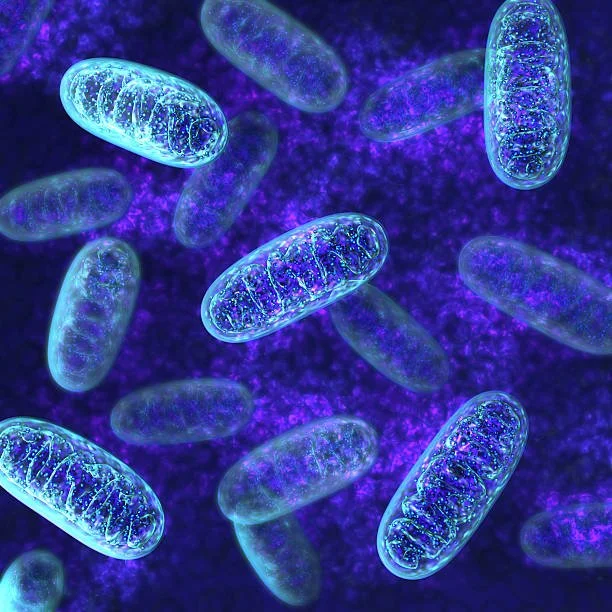
Mitochondria are often called the “powerhouses” of the cell because they generate ATP — the energy currency that fuels almost every biological process.
Red light therapy isn’t just a relaxing way to spend 20 minutes - it’s a complex cascade of cellular events that ultimately leaves you feeling energised, recovered and glowing. At ReGen Rooms in Leamington Spa, we often hear clients say they feel the benefits but don’t fully understand how the light works. This article lifts the hood on photobiomodulation, explaining the mechanisms inside your cells and tissues when you step into our NovoTHOR® XL bed.
Photobiomodulation 101: Light Meets Mitochondria
Primary photoreceptor: Cytochrome c oxidase
Your cells contain mitochondria, tiny organelles nicknamed the “powerhouses” because they produce adenosine triphosphate (ATP) - the fuel for almost every biological process. The key photoreceptor in photobiomodulation is cytochrome c oxidase (COX), a component of the mitochondrial respiratory chain. When red (630–660 nm) and near‑infrared (810–850 nm) photons strike COX:
Electron transport accelerates: Photons energise electrons within COX, speeding up the electron transport chain. This increases proton pumping and ultimately boosts ATP synthesis.
Nitric oxide release: Bound nitric oxide (NO) is released from COX, allowing oxygen to bind and respiration to resume. NO then diffuses out of mitochondria to dilate blood vessels, improving circulation.
Want to understand how frequently red light therapy should be used to maximise these cellular benefits? Read our guide on how often to use red light therapy.
Secondary messengers: Reactive oxygen species & calcium
Low‑dose light produces a brief burst of reactive oxygen species (ROS) within mitochondria. Contrary to the damage caused by chronic oxidative stress, these controlled ROS act as signalling molecules that trigger beneficial adaptations. Calcium ion channels may also be directly modulated by light.
Tertiary effects: Gene expression & protein synthesis
The initial biochemical changes lead to activation of transcription factors like NF‑κB and AP‑1. The result is increased expression of antioxidant enzymes, growth factors, anti‑inflammatory cytokines and extracellular matrix proteins. Over time, this translates into tissue repair, collagen production and a stronger immune response.
Biphasic dose response
Photobiomodulation follows a hormetic curve: low doses stimulate, high doses inhibit. Too much light can produce excessive ROS and suppress respiration. That’s why dosage and session length are critical - more is not always better.
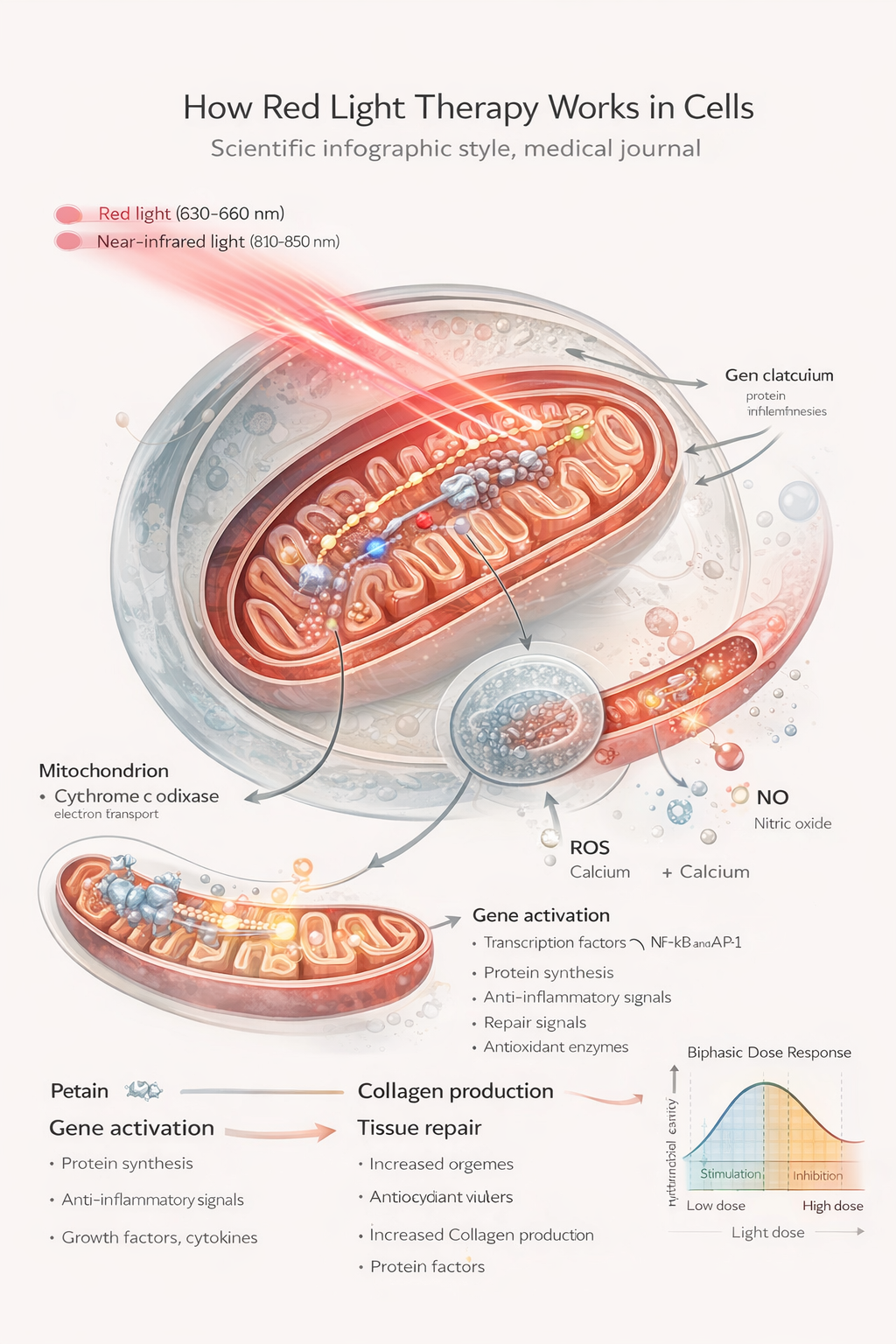
Red (630–660 nm) and near-infrared (810–850 nm) wavelengths stimulate cytochrome c oxidase in mitochondria, increasing ATP production and activating cellular repair pathways. This process is known as photobiomodulation - the cellular mechanism behind red light therapy treatments.
System‑Wide Benefits: What You Feel and See
Enhanced Cellular Energy
By increasing ATP production, red light therapy boosts the energy available to your cells. Clients often report feeling alert and recharged after sessions. Athletes use it to improve endurance, while those with chronic fatigue benefit from a steady energy lift.
Improved Circulation and Oxygenation
Released nitric oxide causes vasodilation, widening blood vessels and increasing blood flow. This delivers more oxygen and nutrients to tissues and accelerates waste removal. Better micro‑circulation helps heal injuries faster and supports healthier skin and hair.
Reduced Inflammation
One of the most reproducible effects of photobiomodulation is overall inflammation reduction. Low‑level light increases antioxidant defences, balances reactive nitrogen species and down‑regulates pro‑inflammatory cytokines. Studies show photobiomodulation activates NF‑κB in normal cells but suppresses inflammatory markers in activated immune cells. This makes RLT useful for arthritis, fibromyalgia and even brain inflammation.
Many people combine red light therapy with heat-based therapies to further support circulation and recovery. You can learn more about how infrared sauna therapy works here.
Collagen & Skin Health
Red light stimulates fibroblasts, the cells that produce collagen and elastin. Increased collagen improves skin elasticity, reduces fine lines and supports wound healing. Many clients at ReGen Rooms notice brighter, firmer skin after several weeks of consistent sessions. In dermatology, photobiomodulation is used as adjunct therapy for acne, psoriasis and scarring.
Muscle Recovery & Pain Relief
By increasing ATP and reducing oxidative stress, red and near‑infrared light help muscles repair faster. Near‑infrared wavelengths penetrate several centimetres into tissue, making them ideal for treating joints, tendons and deep muscle fibres. Increased circulation and reduced inflammation translate into less soreness, faster recovery and enhanced performance.
For athletes and recovery-focused clients, red light therapy is often paired with hot and cold exposure. Read our guide to contrast therapy and recovery.
Nervous System & Hormones
RLT activates the parasympathetic nervous system, promoting relaxation. It also influences hormone production. In one study, nightly 30‑minute sessions increased serum melatonin, improving sleep quality. The treatment may also support cortisol regulation, though more research is needed.
Some people notice a calming or sleepy effect after sessions. Learn why this happens in our article explaining whether red light therapy can make you tired.
Hair Growth & Scalp Health
Red light therapy increases blood flow to hair follicles and stimulates mitochondrial activity within the dermal papilla cells, which can revive dormant follicles and encourage hair growth. Several trials show significant hair regrowth after consistent use over months. Our full‑body bed treats the scalp and entire body simultaneously, but handheld devices can be used specifically on the scalp.
Comparing Red and Near‑Infrared Light
Although both red and near‑infrared wavelengths stimulate similar pathways, they have different penetration depths and target tissues:
Wavelength comparison
Red vs Near-Infrared Light
Although both wavelengths support photobiomodulation, they behave slightly differently in the body. Red light is typically absorbed more superficially, while near-infrared light penetrates deeper into tissue.
Our NovoTHOR XL bed combines both wavelengths, delivering a full‑spectrum treatment that addresses surface and deeper tissues simultaneously.
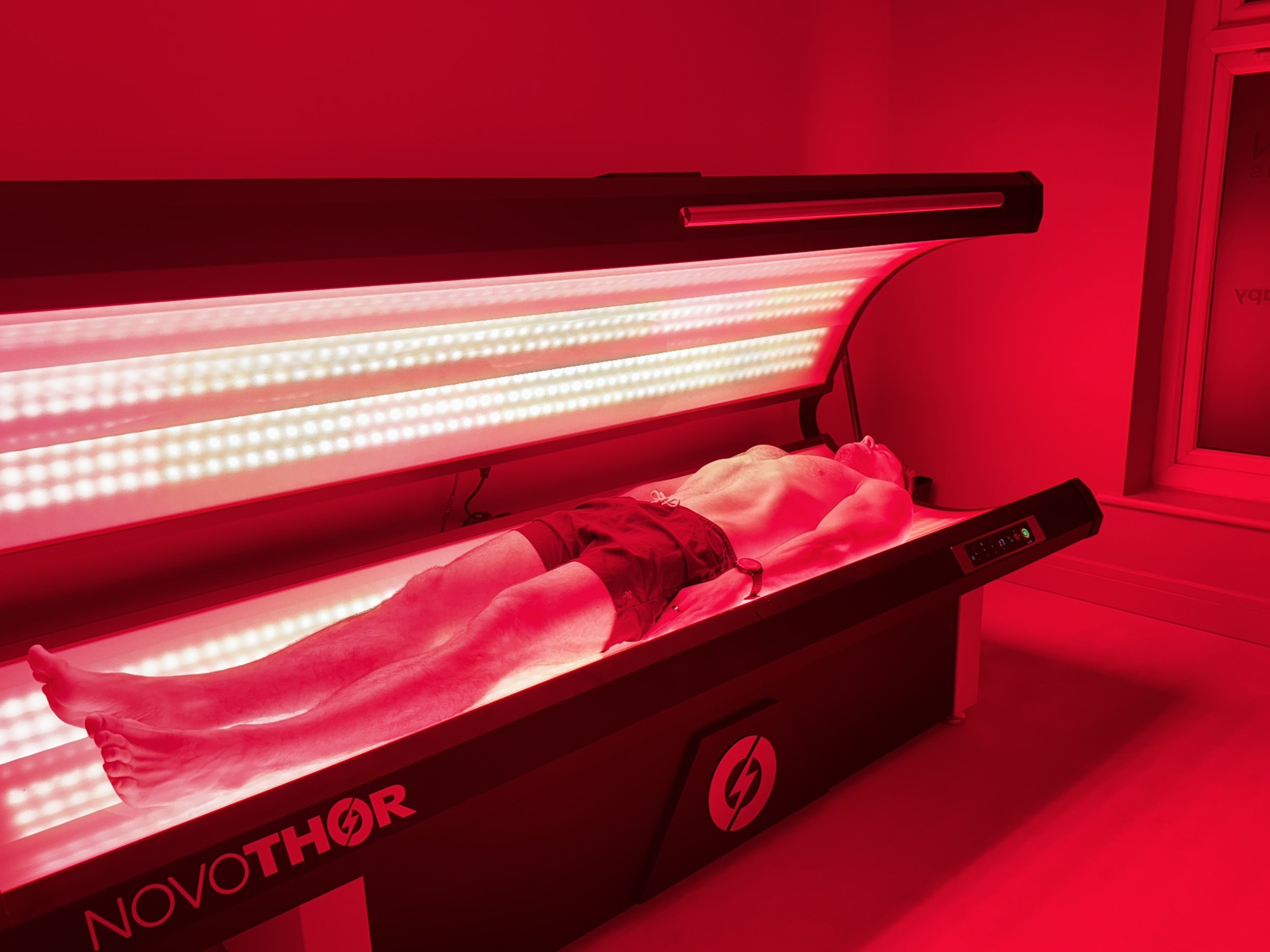
The NovoTHOR full-body red light therapy bed delivers medical-grade photobiomodulation to support cellular energy, recovery and inflammation reduction.
How Photobiomodulation Differs from Other Therapies
Infrared sauna: Uses heat to raise core body temperature, stimulating detoxification and cardiovascular conditioning. RLT delivers light energy without significant heat. Explore our infrared sauna guide here.
Contrast therapy: Alternating hot and cold exposures triggers vascular constriction and dilation, flushing toxins and reducing soreness. RLT works on a cellular level to enhance energy and repair. Discover contrast therapy here.
PEMF therapy: Uses electromagnetic fields to influence ion channels and nerve conduction. It complements RLT by calming overactive nerves and reducing pain. Learn more about PEMF + light therapy here.
Many clients pair RLT with one or more of these therapies for synergistic benefits.
Frequently Asked Questions
-
Cellular changes occur during your first session - ATP production increases almost immediately. However, clinical benefits like reduced pain or improved skin typically appear after several weeks of regular sessions.
-
Yes, when used correctly. The therapy is non‑invasive and has been studied for decades. The most common risks involve overuse, which can inhibit cell function or cause burns. Always follow recommended session lengths and wear eye protection.
-
At appropriate doses, RLT is beneficial. Extremely high doses may create excessive ROS and suppress mitochondrial function. Our trained therapists ensure safe exposure levels.
-
Research on RLT’s effects on cortisol, thyroid hormones and sex hormones is ongoing. The therapy’s ability to reduce inflammation and oxidative stress may indirectly support hormonal balance, but evidence is still emerging.
-
RLT activates the parasympathetic nervous system and may increase melatonin in the evening, leading to relaxation and drowsiness. This is a sign that your body is shifting into “rest and repair” mode.
Why Choose ReGen Rooms for Photobiomodulation?
Understanding the science is fascinating, but experiencing it is transformative. At ReGen Rooms, we use the NovoTHOR® XL full‑body bed, providing consistent, medical‑grade wavelengths across your entire body. Our facility is based in central Leamington Spa, within walking distance of the Royal Pump Rooms and Jephson Gardens. Clients from Coventry, Warwick University, Kenilworth and Stratford‑upon‑Avon visit us for evidence‑based recovery and wellness.
We don’t just offer red light therapy; we integrate infrared saunas, contrast therapy, PEMF + light therapy, oxygen training and compression therapy. Our experts design personalised protocols to help you recover faster, heal chronic injuries, sleep better and feel more energised.
Final Thoughts
When you lie under red and near‑infrared light, your body isn’t just basking, it’s conducting a symphony of cellular processes. Mitochondria absorb photons, ATP production soars, nitric oxide dilates blood vessels, inflammation drops and genes switch on to support repair. These mechanisms explain why red light therapy helps with everything from skin health and pain relief to sleep and hair growth.
Ready to experience photobiomodulation from the inside out? Book your session at ReGen Rooms in Leamington Spa today and unlock the cellular power of light.
References
Hamblin MR. Mechanisms and applications of the anti‑inflammatory effects of photobiomodulation. AIMS Biophysics 4(3):337–361 (2017).
Gordon S et al. Red Light Therapy: How Many Sessions Do You Need? Health.com (2025).
Zhao J et al. Red light and the sleep quality and endurance performance of Chinese female basketball players. J Athl Train 47(6):673–678 (2012).
Stanford Medicine. Red light therapy: What the science says (2025).
Kaiyan Medical. How Often Should You Do Red Light Therapy for Best Results? (2025).
