
Pain & Inflammation
Why Inflammatory Balance Matters
Chronic inflammation can affect far more than one area of the body. From joint discomfort and muscle soreness to inflammatory skin stress and fatigue, ongoing inflammation often slows recovery and impacts overall wellbeing.
Red light therapy - also known as photobiomodulation (PBM) - is a non-invasive, evidence-led treatment designed to support the body’s natural inflammatory balance at a cellular level. At ReGen Rooms in Royal Leamington Spa, red light therapy is used to help calm inflammation, support tissue repair and improve recovery without medication or downtime.
What is Inflammation?
Inflammation is a natural immune response that helps the body heal after injury, stress or infection. In the short term, it is protective. Problems arise when inflammation becomes persistent or dysregulated, often influenced by factors such as:
Ongoing physical or mental stress
Poor sleep and recovery
Repetitive strain or injury
Skin barrier disruption
Hormonal imbalance
Systemic inflammatory load
Chronic inflammation is now recognised as a contributing factor in joint discomfort, muscle soreness, inflammatory skin concerns, fatigue and slower healing.
How Red Light Therapy Helps Calm Inflammation
Red light therapy uses specific wavelengths of red and near-infrared light that penetrate beneath the skin’s surface and are absorbed by the mitochondria — the energy centres of the cell.
Supporting Cellular Energy (ATP)
When cells are inflamed or under stress, energy production can become less efficient. Red light therapy supports mitochondrial function, helping optimise cellular energy (ATP) so tissues can regulate inflammatory signalling and recover more effectively.
Cellular supportImproving Circulation & Oxygen Delivery
Red and near-infrared light can support microcirculation, increasing blood flow and oxygen delivery to affected tissues. This helps clear inflammatory by-products and deliver nutrients required for repair.
- Remove inflammatory by-products
- Deliver nutrients required for repair
- Support tissue resilience and recovery
Supporting Tissue Repair & Recovery
By influencing cellular energy, circulation and inflammatory signalling, red light therapy supports the body’s natural repair processes — particularly useful for inflammatory stress linked to physical activity or repetitive strain.
Recovery support
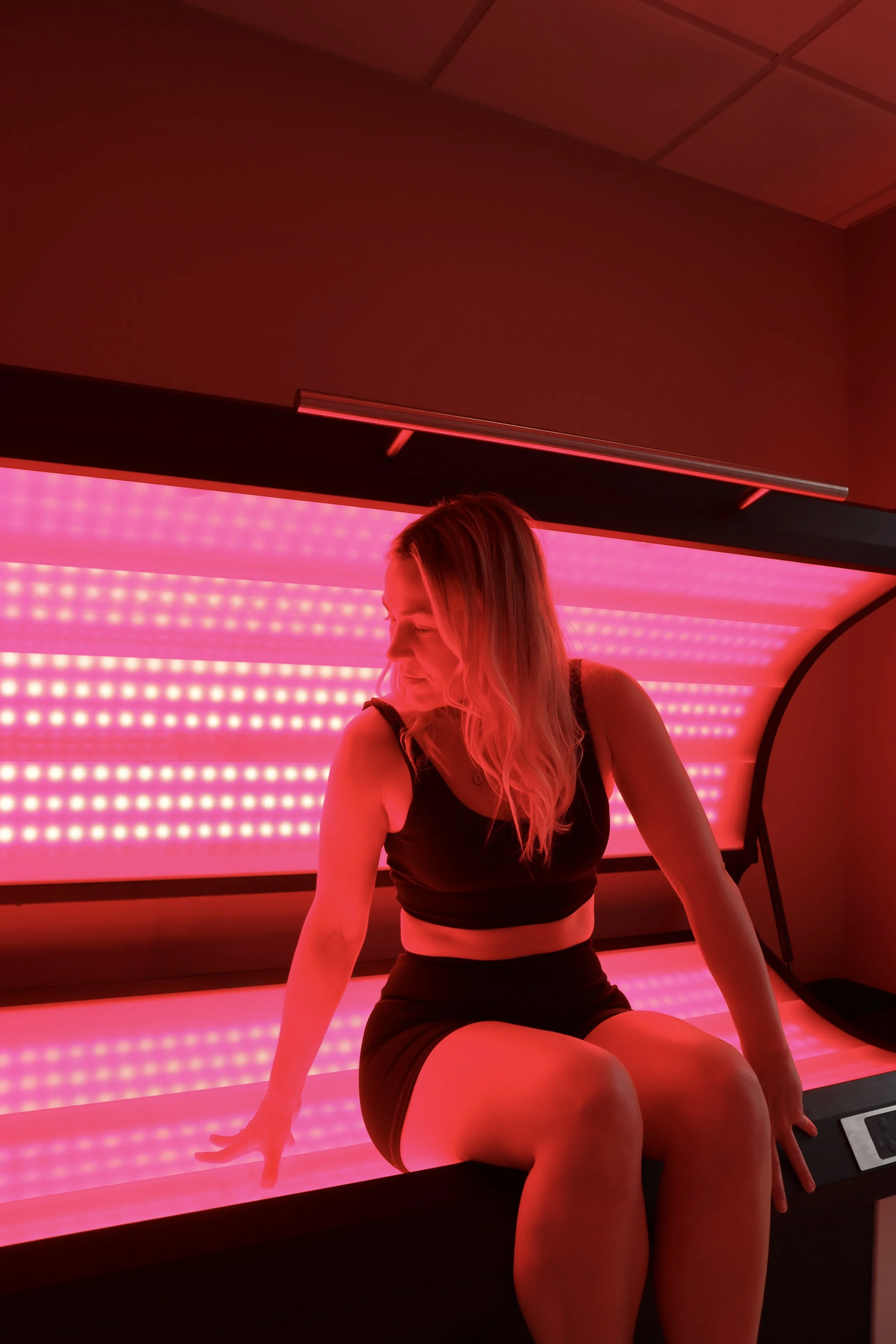
Red Light Therapy for Inflammation: Who It Supports (and Who It’s Not For)
Explore who this therapy commonly supports, the inflammatory concerns people use it for, and when it may not be suitable.
1/3
Muscle or Joint Inflammation
Used to support recovery where muscles or joints feel inflamed, stiff or under ongoing strain.
Exercise-Related Soreness
Helpful where inflammation contributes to delayed recovery or muscle soreness after activity.
Inflammatory Skin Stress
Used to support skin experiencing ongoing inflammatory stress or slow repair.
Inflammation-Linked Fatigue
Often chosen where ongoing inflammation contributes to low energy or general fatigue.
General Stiffness or Discomfort
Supports people managing low-level stiffness linked to inflammation or reduced recovery.
Red light therapy is typically used alongside other wellness and recovery approaches, rather than as a stand-alone treatment.
Common inflammatory concerns people use red light therapy to support
- Joint stiffness and inflammatory flare-ups
- Muscle soreness and slow recovery
- Tendon and soft tissue irritation
- Inflammatory skin stress
- Inflammation-linked fatigue
These are wellness-focused support areas — not medical claims — and protocols are tailored to your goals and comfort.
Who red light therapy may not be suitable for
Red light therapy is generally well tolerated, but it may not be appropriate for everyone. Check with a medical professional if unsure.
- Photosensitivity conditions or a history of light-triggered reactions
- Medications that increase light sensitivity (ask your prescriber if unsure)
- Active cancer or undergoing cancer treatment (requires medical sign-off)
- Pregnancy (we recommend medical guidance before booking)
- Unexplained pain, swelling or fever (seek medical assessment first)
If you’re under clinical care, we can help you decide whether a wellness-focused PBM session is appropriate.
Evidence-led
Evidence-Led Inflammation Protocols at ReGen Rooms
Our protocols are guided by published research on wavelength, session length and frequency — adapted into practical, wellness-focused plans.
Muscle & Joint Inflammation + Slow Recovery
Goal: Support inflammatory balance, improve recovery capacity, and reduce stiffness or post-exercise soreness.
Targeted LED + PEMF (Celler8)
- Frequency
- 2–3× per week
- Session time
- 12–20 minutes
- Duration
- 6–8 weeks
- Focus
- Red + NIR + PEMF support
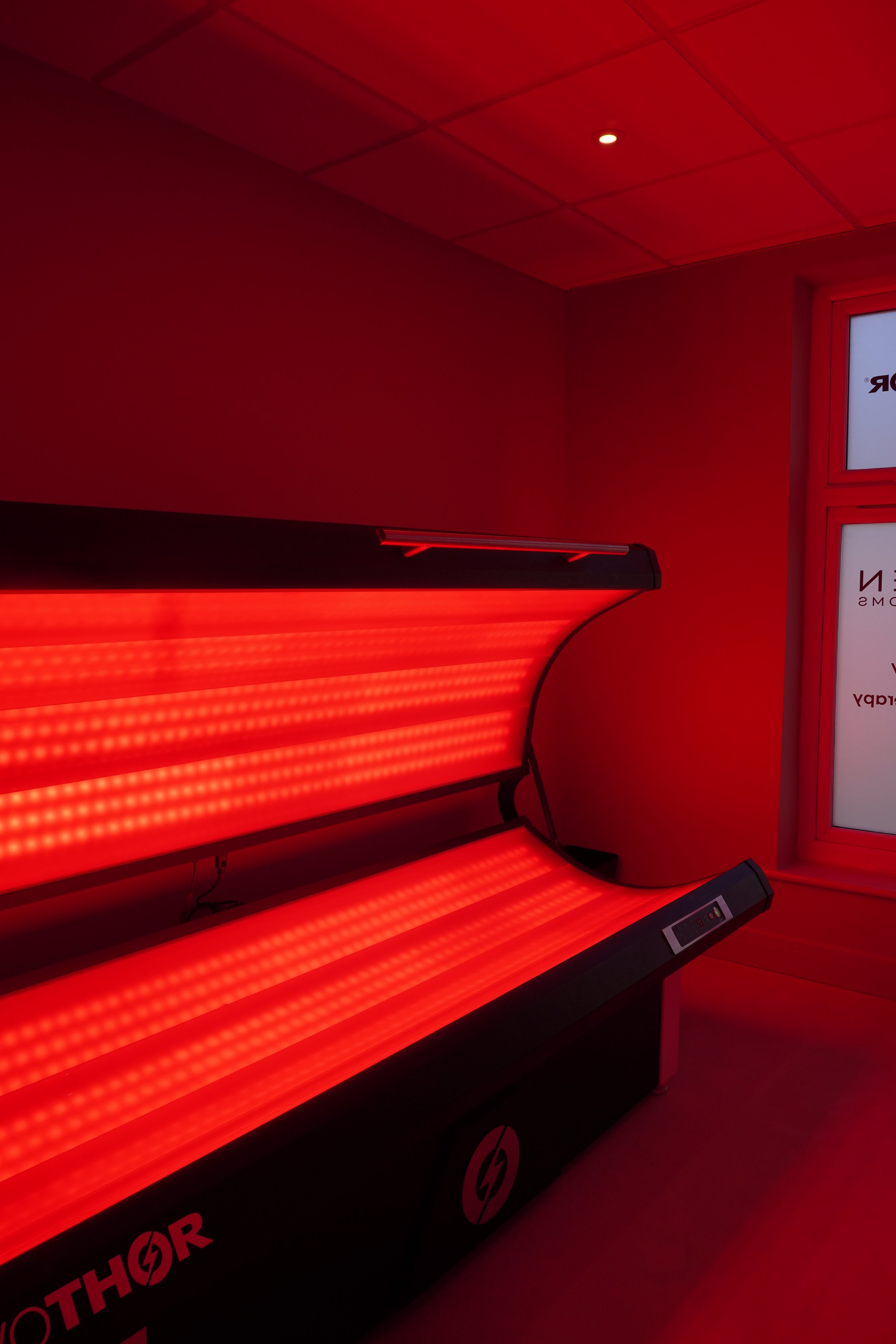
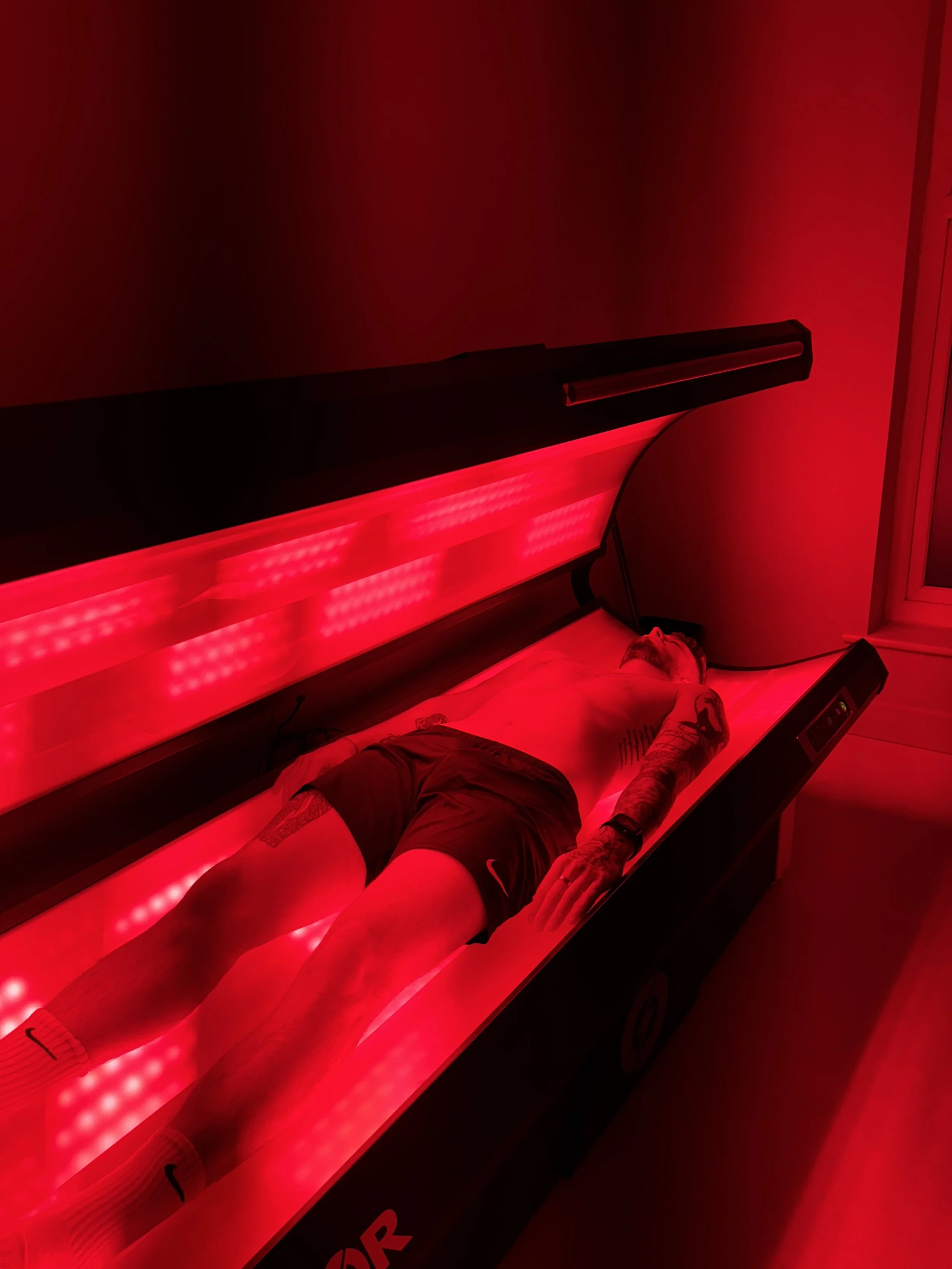
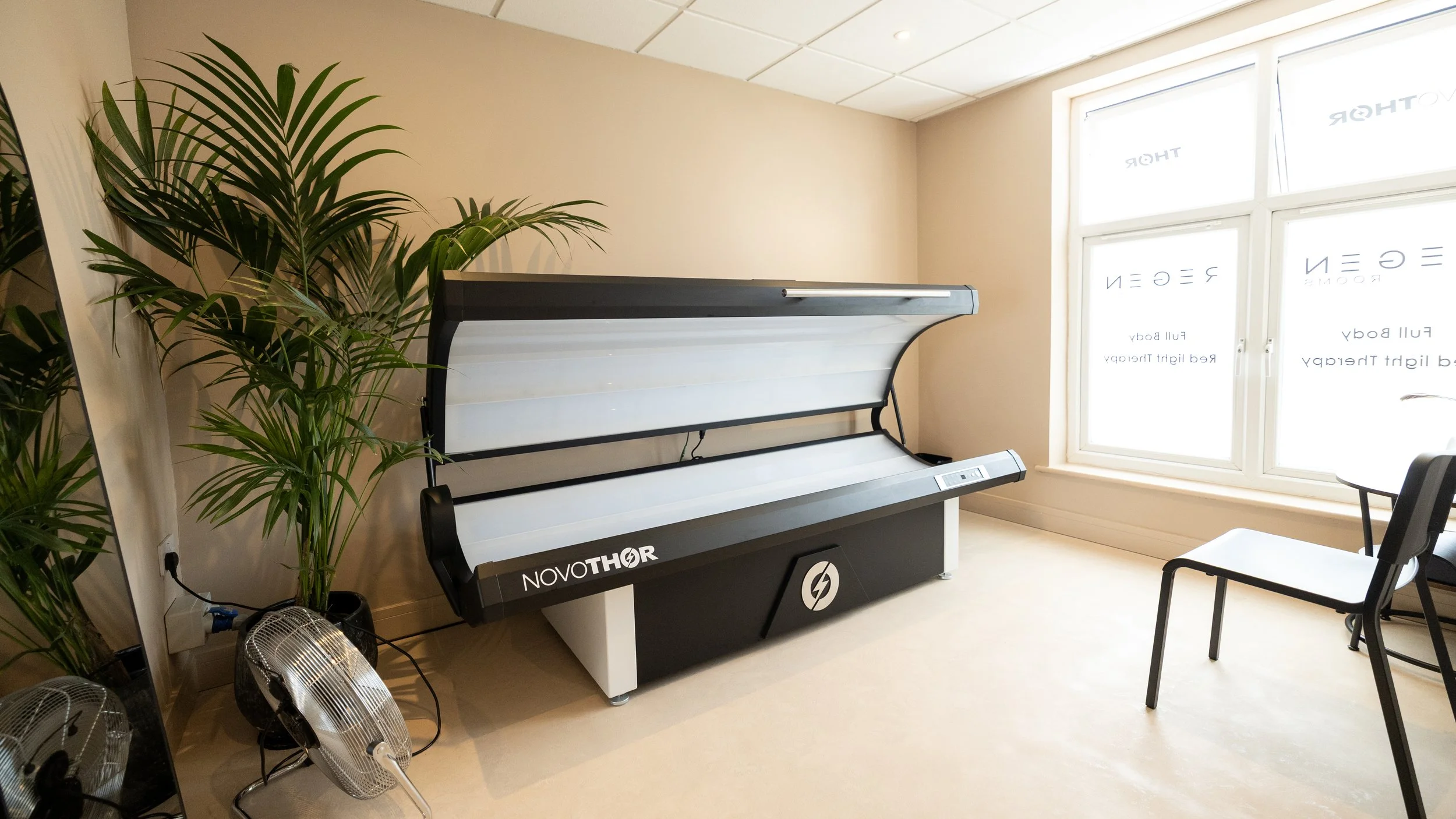
Whole-Body Photobiomodulation (NovoTHOR)
- Frequency
- 1–2× per week
- Session time
- 12 minutes
- Duration
- Ongoing (min. 6–8 weeks)
Why this works
Evidence-led PBM and PEMF approaches are commonly used to support:
- Inflammatory signalling balance
- Cellular energy (ATP) and recovery efficiency
- Microcirculation and oxygen delivery
- Tissue repair and resilience
Combining targeted sessions with whole-body PBM can support both local tissue recovery and wider systemic inflammatory load.
Protocols are guided by published photobiomodulation research and delivered using clinical-grade systems. Have a question? Speak to a member of our team.
Explore the research
Evidence for Photobiomodulation (PBM) for Inflammation & Recovery
Below is an evidence-led snapshot of how red and near-infrared light therapy (PBM) is studied for inflammatory balance, tissue repair and recovery. This section is designed for quick scanning, with expandable details if you want the science.
Inflammatory Signalling Support
PBM has been investigated for its potential to influence pro-inflammatory signalling pathways and support a more balanced inflammatory response in stressed tissues.
What studies often measure
- Changes in inflammatory markers (e.g., IL-6, TNF-α) in specific study contexts
- Swelling, tenderness and functional outcomes after strain or procedures
- Short-term recovery metrics (comfort, mobility, perceived soreness)
Tissue Repair & Cellular Energy (ATP)
PBM is commonly studied for mitochondrial interactions (often discussed as ATP support), which may relate to recovery, repair capacity and resilience under inflammatory load.
Mechanisms researchers discuss
- Mitochondrial photoacceptors (often cytochrome c oxidase is discussed)
- Cell signalling changes associated with repair pathways
- Microcirculation and oxygen delivery in treated tissues
Muscle Soreness & Training Recovery
Exercise trials often examine whether PBM can support post-workout recovery, soreness perception and markers linked to training stress.
What’s usually reported
- Perceived muscle soreness and recovery ratings
- Performance measures in repeated bouts (context-dependent)
- Biomarkers used as proxies for muscle stress (study-specific)
At ReGen Rooms (Royal Leamington Spa), we use clinical-grade photobiomodulation as a supportive, non-invasive approach for inflammatory stress, recovery and tissue repair — with protocols guided by session length, frequency and comfort.
-
Red light therapy reduces inflammation by supporting mitochondrial function inside cells. Specific red and near-infrared wavelengths help increase cellular energy (ATP), improve circulation, and regulate inflammatory signalling, allowing tissues to recover more efficiently and calm chronic inflammatory stress.
-
Yes. Red light therapy is commonly used to support muscle and joint inflammation by improving blood flow, oxygen delivery, and tissue repair. Research shows photobiomodulation can help reduce soreness, stiffness, and recovery time associated with physical strain or overuse.
-
Most inflammation-focused protocols involve 2–3 targeted sessions per week for 6–8 weeks, with optional whole-body sessions weekly. Results are cumulative, meaning consistency over time is more important than one-off treatments.
-
Red light therapy is considered a low-risk, non-invasive treatment when delivered using clinical-grade devices and appropriate protocols. Sessions are non-thermal, painless, and free from UV exposure, making them suitable for regular use as part of a recovery or wellness routine.
-
Yes. Red light therapy is often used alongside other wellness and recovery approaches, such as physiotherapy, strength training, mobility work, or PEMF. It is typically viewed as a supportive therapy rather than a replacement for medical treatment.
Frequently Asked Questions
How to book
There are three ways to book. First time customers can book individual therapy sessions. Seasoned customers may prefer to block book therapies via our single therapy packages. Or for those who want the flexibility to mix and match therapies, we have credit packs available below:
Mix & Match Credit Packs
-
Essentials
✷
20 Credits
£95
Great for first timers.
Use across any therapy.£4.75 per credit
-
Elevate
✷✷
40 Credits
£180
Lower cost per session.
Use across any therapy.£4.50 per credit
-
Momentum
✷✷✷
60 Credits
£240
Best flexibility and savings.
Use across any therapy.£3.50 per credit.