
Morning vs Evening Red Light Therapy: When Is the Best Time to Use It?

The circadian rhythm regulates the body’s sleep–wake cycle, hormone release and recovery processes throughout the night.
Choosing the right time for your red light therapy (RLT) session can make a huge difference in how you feel. Some clients at ReGen Rooms in Leamington Spa love an energising morning session before work or class, while others swear by an evening treatment to wind down and sleep deeply. So, which is better - morning or evening?
In this evidence‑based guide, we’ll explore how light influences your circadian rhythm, how RLT interacts with hormones like melatonin and cortisol, and what the research suggests about the timing of sessions. We’ll also share practical tips on tailoring your schedule and how to combine red light therapy with other modalities like our infrared sauna, contrast therapy, and PEMF sessions. Whether you’re trying to boost energy, support sleep, improve skin health or recover faster, this article will help you make an informed choice.
Understanding Your Circadian Rhythm
Your body operates on a 24‑hour internal clock called the circadian rhythm. This rhythm governs sleep–wake cycles, hormone release, body temperature and countless metabolic processes. The primary signals that synchronise your clock are light and darkness. Exposure to different wavelengths at specific times sends messages to the brain, particularly the suprachiasmatic nucleus (SCN) in the hypothalamus.
Blue light (short wavelengths): Morning sunlight and screens emit blue light, which suppresses melatonin and promotes alertness.
Red and near‑infrared light: Longer wavelengths have less impact on melatonin suppression and may even support circadian regulation by modulating mitochondrial activity and nitric oxide release.
Darkness: Triggers melatonin release, promoting drowsiness and recovery.
Understanding how different types of light influence your circadian rhythm helps explain why the timing of RLT sessions matters.
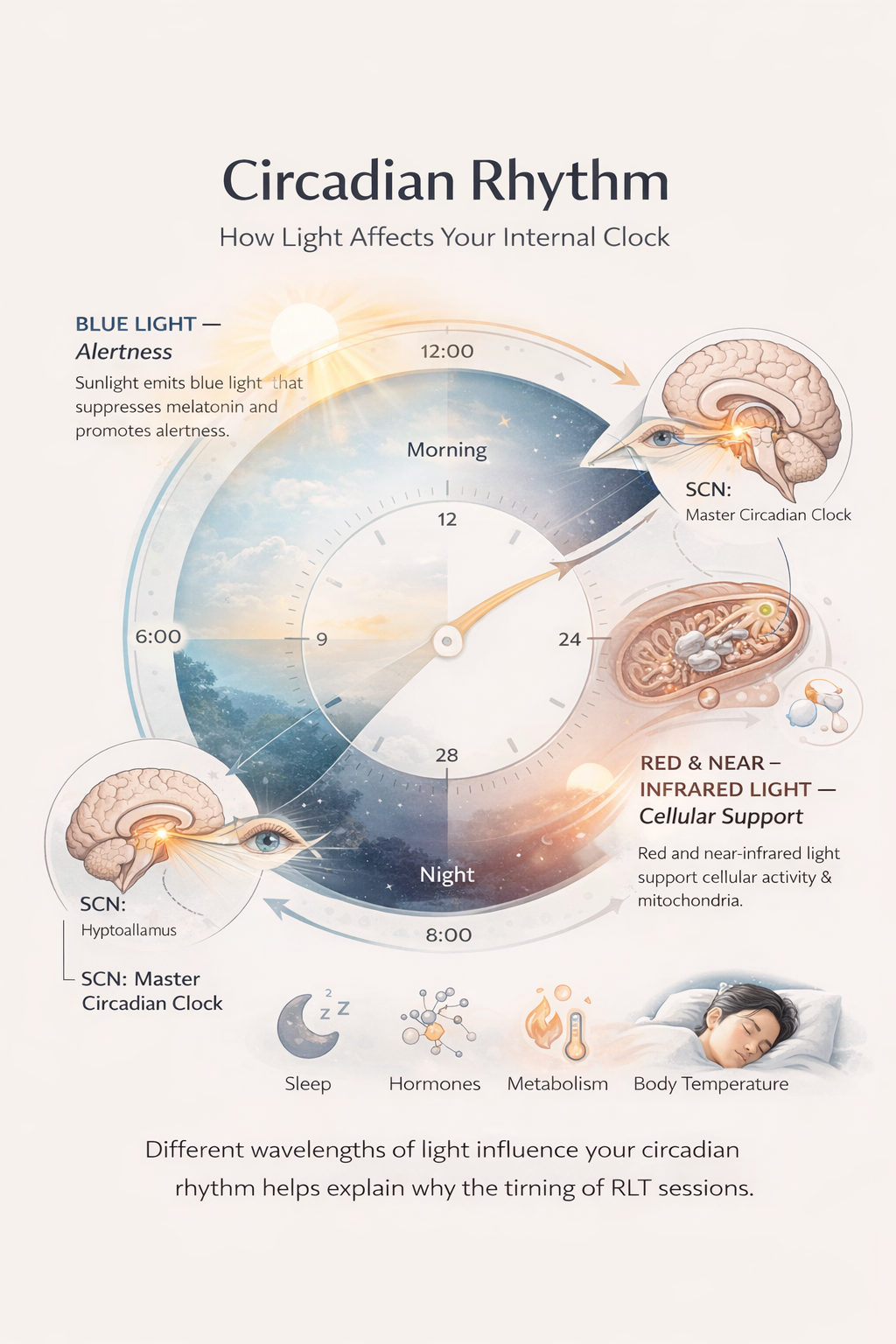
Different wavelengths of light influence the circadian rhythm by signalling the brain’s master clock in the hypothalamus.
To understand the underlying biology behind these effects, you can read our detailed guide explaining how red light therapy works inside the body.
The Science Behind Timing
Morning Sessions: Energy and Cognitive Performance
Alertness & focus: Using red light therapy shortly after waking may help combat sleep inertia (that groggy feeling you get upon waking) and improve mental performance. Experts note that morning sessions can support memory, attention and mood.
Circadian alignment: Morning light exposure, especially blue light, advances your circadian phase, making it easier to wake up earlier. Red light doesn’t shift your rhythm as strongly but can complement natural sunlight.
Workout preparation: Some athletic protocols involve near‑infrared sessions 3–6 hours before exercise. In animal studies, pre‑exercise RLT increased muscle performance by 300–600%. While more human research is needed, many athletes report feeling primed and energised after morning sessions.
Evening Sessions: Relaxation and Sleep
Melatonin support: A 14‑day study in Chinese female basketball players used 30‑minute whole‑body RLT sessions every night. Participants experienced significant improvements in sleep quality (lower PSQI scores) and increased serum melatonin levels compared with placebo.
Nervous‑system regulation: RLT activates the parasympathetic “rest‑and‑digest” response. Many clients feel deeply relaxed after treatment, similar to the calmness after yoga or a massage. This makes evening sessions ideal for those struggling with insomnia, stress or nervous‑system dysregulation.
Synergy with other treatments: Pairing an evening red light session with an infrared sauna or contrast therapy intensifies relaxation and detoxification. Sweating in the sauna then cooling off in our ice bath helps flush toxins and reduce inflammation, enhancing the restorative effects of RLT.
Some people also notice a calming or sleepy effect after sessions. We explore why this happens in our article on whether red light therapy can make you tired.
Afternoon or Midday Sessions: Balanced Benefits
Not everyone can fit in a morning or evening session. Midday treatments provide a compromise:
Steady energy: A midday session boosts ATP production and circulation without interfering with melatonin. It’s perfect for those who hit an afternoon slump and want a safe pick‑me‑up.
Recovery window: For athletes training later in the day, a midday or early‑afternoon session primes the muscles for workout and aids post‑session recovery.
If you're unsure how frequently red light therapy should be used for different goals, our guide on red light therapy frequency explains recommended session schedules in more detail.
Factors to Consider When Scheduling
1. Your Primary Goal
Sleep improvement: Schedule sessions in the late afternoon or early evening. Studies show nightly treatments over two weeks improve sleep quality and melatonin.
Energy and mood: Morning sessions may help combat grogginess and improve cognitive performance.
Skin health: Timing is less critical. Consistency (3–5 sessions per week) matters more.
Pain relief & muscle recovery: Both morning and evening sessions can help. For pre‑exercise benefits, aim for 3–6 hours before your workout.
2. Device Type & Dosage
Full‑body beds (like NovoTHOR XL): Offer even coverage and shorter session times (15–20 minutes). Timing is flexible because the exposure is uniform.
Panels & handheld devices: May require longer sessions on specific body parts. When treating a local area (e.g., shoulder, face), morning or evening exposures matter less, though overusing late at night may delay melatonin release.
Intensity & duration: Avoid sessions longer than 30 minutes to prevent overstimulation or burns. Remember the biphasic dose response - more isn’t always better.
3. Lifestyle & Routine
If you have a busy schedule or shift‑work, pick the time you can consistently commit to.
Keep a journal to track how you feel after sessions at different times. Adjust based on your sleep, mood and performance.
Combining Red Light Therapy with Other Modalities
Timing can be tailored when combining RLT with our other recovery therapies:
Infrared Sauna: A 30‑minute sauna session before RLT warms tissues, increases circulation and primes your body to absorb light. This combo is great before an evening RLT session to maximise relaxation.
Contrast Therapy: Alternate between hot and cold exposures (sauna and ice bath) to trigger vascular responses and reduce inflammation. Finish with red light therapy to accelerate cellular repair.
PEMF + Light Therapy: Pulsed electromagnetic field therapy calms nerve activity. Pairing it with RLT, either back‑to‑back or integrated into a session, enhances neuromuscular recovery and sleep quality.
Speak to our team to design a personalised protocol. We’ve helped runners prepping for marathons, corporate executives seeking stress relief, and chronic pain patients all optimise their therapy schedules.
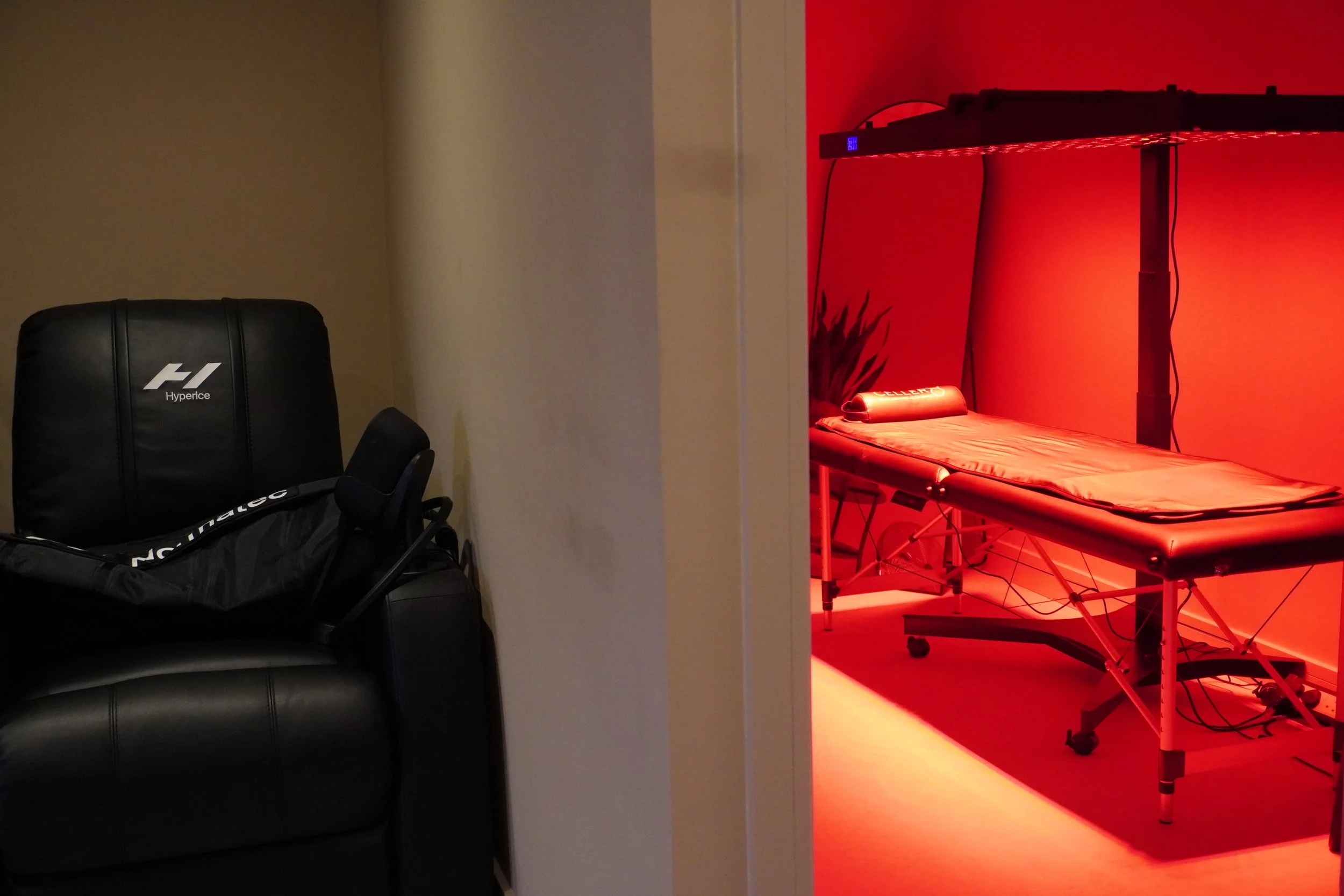
Red and near-infrared light therapy sessions are often used in the evening to support recovery without significantly disrupting melatonin production.
Frequently Asked Questions
-
Generally, no. Photobiomodulation is dose‑dependent: too much light can inhibit cellular function. Exceptions exist for very low‑intensity devices, but our full‑body bed delivers high power, so daily or twice‑daily sessions aren’t necessary. Stick to 2–5 sessions per week.
-
Yes, provided the intensity and duration are appropriate. The 14‑day study showed improved sleep quality with nightly 30‑minute sessions. However, if you find that bright light keeps you awake, try finishing your session at least one hour before bedtime.
-
Morning light exposure can shift your circadian rhythm earlier. For natural night owls, gradually introducing morning sessions may help reset the clock. Combine with good sleep hygiene (avoid screens at night, maintain a consistent bedtime).
-
Yes. Even red light can be intense at close proximity. Wear the goggles provided during sessions to protect your eyes.
-
Short daily sessions (10–20 minutes) may be safe for sleep improvement, but most protocols still recommend breaks. Listen to your body and consider a rest day to allow cellular processes to normalise.
How We Structure Sessions at ReGen Rooms
We design RLT schedules around your goals, lifestyle and other therapies. A typical plan might look like this:
Example Red Light Therapy Protocols
The ideal timing and frequency of red light therapy can vary depending on your goal. Below are common protocols used for sleep, recovery, energy and skin health.
Our NovoTHOR® XL bed provides uniform coverage, so you won’t need to reposition yourself. Sessions last 15–20 minutes and can be paired with a sauna or ice‑bath session in one visit. You’ll leave feeling refreshed, relaxed or ready to take on the day, depending on your chosen time!
Why Choose ReGen Rooms in Leamington Spa?
Conveniently located near the Royal Pump Rooms and Jephson Gardens, ReGen Rooms offers the Midlands’ premier red light therapy experience. Our NovoTHOR XL bed is one of the few full‑body systems in the UK, delivering consistent, medical‑grade wavelengths. We also offer infrared sauna, contrast therapy, PEMF + light therapy, cold‑water immersion and oxygen therapy, creating a holistic recovery hub.
Our team will help you tailor your therapy schedule, whether you’re seeking better sleep, sharper focus, smoother skin or enhanced athletic performance. Clients from Coventry, Warwick University, Kenilworth and Stratford‑upon‑Avon trust us for evidence‑based protocols and a welcoming atmosphere.
Final Thoughts
The best time to do red light therapy depends on your goals, lifestyle and device. Morning sessions may boost energy and cognitive performance, while evening treatments support relaxation and sleep. Afternoon sessions offer balanced benefits and can prime your body for later workouts or recovery. Regardless of timing, consistency, proper dosage and integration with other therapies are key.
Ready to discover your perfect red light therapy routine? Book a session at ReGen Rooms in Leamington Spa today and let our experts help you harness the power of light at the right time for you.
References
Hamblin MR. Mechanisms and applications of the anti‑inflammatory effects of photobiomodulation. AIMS Biophysics 4(3):337–361 (2017).
Gordon S et al. Red Light Therapy: How Many Sessions Do You Need? Health.com (2025).
Zhao J et al. Red light and the sleep quality and endurance performance of Chinese female basketball players. J Athl Train 47(6):673–678 (2012).
Kaiyan Medical. How Often Should You Do Red Light Therapy for Best Results? (2025).
ReGen Rooms Blog. Can Red Light Therapy Make You Tired? (2025).
