
Nervous System Dysregulation and Recovery: Why Healing, Energy and Pain Can Stall
Recovery is often presented as a simple equation: do less, rest more, add the right therapies, and the body will heal. For many people, it doesn’t work that way.
They reduce training, improve sleep habits, invest in recovery therapies and still feel flat, sore, wired or slow to bounce back. Fatigue lingers. Pain resurfaces. Sleep doesn’t feel restorative. Progress stalls without an obvious explanation.
Increasingly, recovery science points to a common underlying factor in these cases: nervous system dysregulation.

Persistent fatigue and stress can reflect nervous system dysregulation rather than lack of rest.
The Nervous System’s Role in Recovery
The nervous system is not just responsible for movement or sensation. It acts as the control centre for how the body allocates energy and prioritises repair.
It influences pain perception, inflammation, sleep–wake cycles, hormonal signalling and cellular recovery. When the nervous system is balanced, these processes work together efficiently. When it isn’t, recovery becomes inconsistent or incomplete - even when everything else appears to be “done right”.
This is why two people can follow similar recovery routines and experience very different outcomes.
What Nervous System Dysregulation Actually Looks Like
Nervous system dysregulation occurs when the body remains biased toward a state of alertness for prolonged periods.
This state - often referred to as sympathetic dominance - is designed to help us respond to short-term threats. In modern life, however, stressors tend to be ongoing rather than temporary. Work pressure, emotional load, disrupted sleep, illness, chronic pain or repeated overexertion rarely arrive in isolation.
Over time, the nervous system adapts by staying switched on.
Rather than oscillating naturally between activation and recovery, the body becomes stuck in a state of readiness. This is where symptoms begin to cluster: persistent fatigue, heightened pain sensitivity, poor sleep quality and a sense that the body never truly powers down.
Why Rest Doesn’t Always Restore Energy
One of the biggest misconceptions in recovery is the idea that rest automatically leads to repair.
In a dysregulated nervous system, rest does not reliably activate parasympathetic (recovery) pathways. Sleep may be light or fragmented. Energy production remains inefficient. Inflammatory signalling stays elevated.
This explains why people can feel exhausted yet restless, drained yet unable to relax.
We explore this pattern further in our article on red light therapy for burnout and low energy, where impaired mitochondrial function and nervous system tone are closely linked.
Pain Without Ongoing Injury
Pain is often assumed to be a direct reflection of tissue damage. In reality, it is an output of the nervous system.
When regulation is disrupted, pain thresholds can drop and sensitisation can increase - even in the absence of new injury. Recovery from flare-ups becomes slower, and symptoms can persist despite normal scans or test results.
This doesn’t mean pain is imagined. It means the nervous system is amplifying signals in an environment it perceives as unsafe or overloaded.
Why Some Recovery Therapies Help - and Others Don’t
Recovery therapies interact with the nervous system in different ways.
Some approaches apply a controlled stress to encourage adaptation. Others support recovery by reducing internal load and improving efficiency.
When the nervous system is already operating near capacity, adding further stress — even in the form of “good” recovery inputs - can delay progress. This is why certain therapies feel helpful at one stage and overwhelming at another.
In our comparison of red light therapy vs infrared sauna, we explain why heat-based therapies can be beneficial for resilient systems but less appropriate during periods of depletion.
Supporting Recovery Without Increasing Demand
For individuals experiencing nervous system dysregulation, early recovery often benefits from approaches that do not significantly increase metabolic or stress load.
Red light therapy is one example. Rather than forcing adaptation, it supports cellular energy production and recovery capacity directly. Whole-body systems such as NovoTHOR®, used at ReGen Rooms, are designed to deliver this support systemically rather than locally, making them particularly relevant when fatigue and recovery issues are widespread.
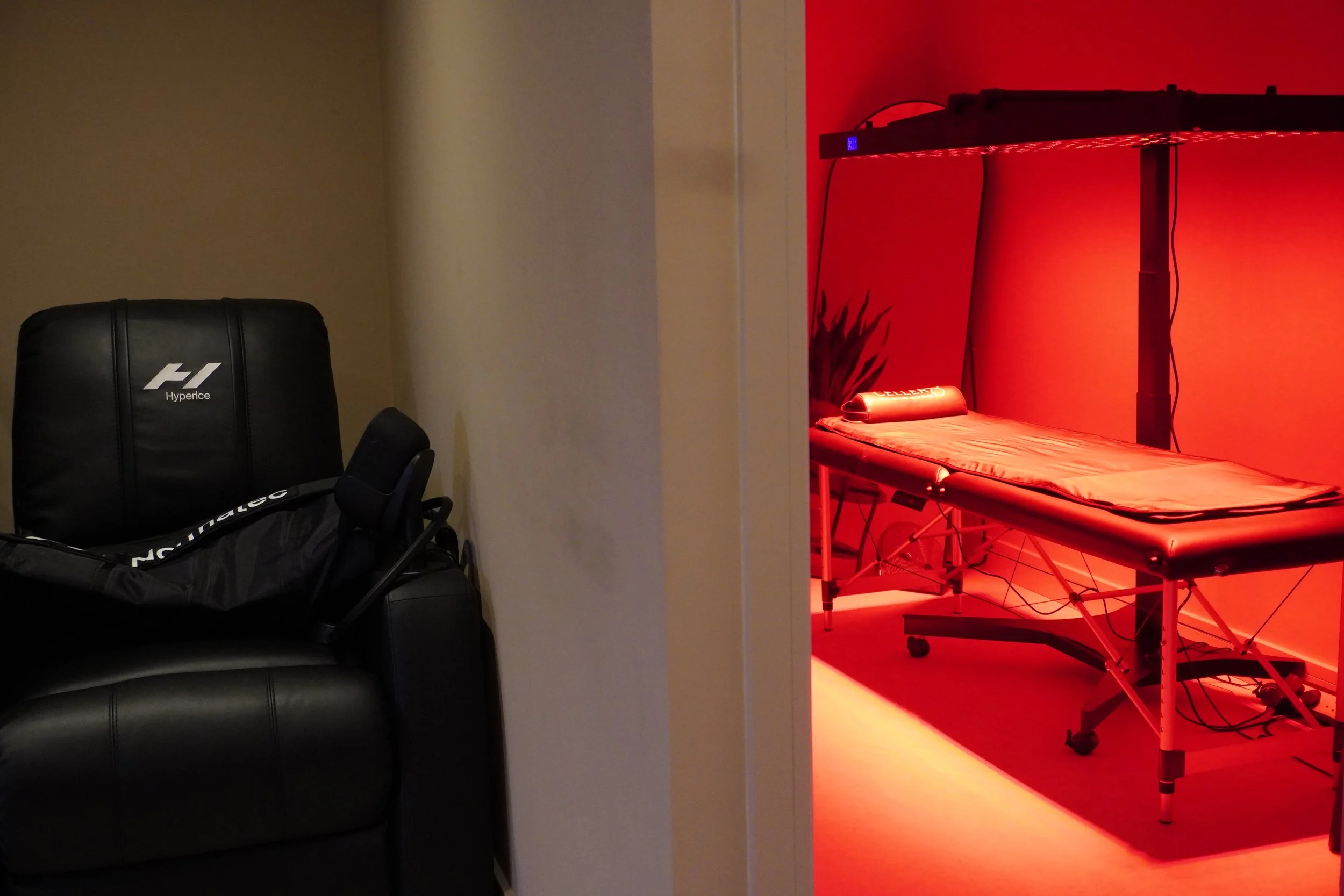
Low-load recovery therapies such as red light therapy, PEMF and compression can support regulation without adding physiological stress.
Safety Before Adaptation
A key principle in nervous system–led recovery is perceived safety.
The body will not prioritise repair if it senses threat - whether physical, emotional or physiological. Creating the conditions for safety allows recovery processes to re-engage naturally.
This is why calm environments, consistency and appropriately paced inputs often outperform intensity in the early stages of recovery. Healing is not forced; it’s permitted.
Recovery Is About Sequencing, Not Doing More
Nervous system–led recovery doesn’t mean avoiding challenge forever. It means sequencing stress and support intelligently.
As regulation improves, tolerance increases. Therapies that once felt overwhelming become beneficial. Energy stabilises. Recovery accelerates.
When recovery strategies align with nervous system capacity, people often notice improvements not just in symptoms, but in how their body responds to everything else they do.
Frequently Asked Questions
-
Persistent fatigue, poor sleep, stress sensitivity, slow recovery and recurring pain are common signs.
-
They can support the process, but regulation usually improves through a combination of environment, pacing and appropriate recovery inputs.
-
No. The nervous system is adaptable and can re-regulate over time when conditions allow.
-
Often, yes - particularly early on. Lower-load approaches are typically better tolerated until resilience improves.
Recovery Works When the System Is Ready
When healing stalls, it’s rarely because you’re not doing enough.
More often, the nervous system isn’t yet in a state where recovery is prioritised. Understanding this shift — from pushing repair to supporting regulation - can change how recovery feels and how effective it becomes.
This article forms part of a wider recovery framework at ReGen Rooms, alongside our guides on burnout, fatigue and therapy selection, helping you make informed, evidence-led decisions about your recovery journey.
Supporting Recovery Starts With Understanding Capacity
If you’re exploring recovery therapies and unsure where to begin, understanding how your nervous system is responding is often the first step.
At ReGen Rooms, recovery approaches are designed to support regulation first - creating the right conditions for healing to follow.
