
Red Light Therapy for Skin: How Photobiomodulation Transforms Collagen, Inflammation, Acne & Repair
Healthy skin doesn’t begin with serums or surface treatments - it begins with energy. Every process that creates radiant, resilient skin, from collagen synthesis to inflammation control, relies on the mitochondria inside your cells. When those mitochondria work efficiently, skin behaves younger, heals faster and responds better to everything you do for it. When they slow down, the visible effects appear as dullness, breakouts, redness, fine lines, uneven tone and sluggish repair.

Radiant, rested, naturally renewed — the skin you get when your cells are working at their best.
This is where red light therapy becomes so powerful. Using very specific wavelengths of red and near-infrared light, photobiomodulation (PBM) communicates directly with your cells, restoring the biological mechanisms that drive clear, firm, balanced skin. And at ReGen Rooms, our full-body NovoTHOR system takes this even further by treating the entire body at once - supporting skin health not just at the surface, but at the level of systemic inflammation, circulation, hormones and recovery.
Red light therapy doesn’t force the skin to behave differently. It reminds it how to behave optimally.

Full-body photobiomodulation inside the NovoTHOR XL — deeper repair, brighter skin and total cellular renewal.
How Red Light Therapy Works Beneath the Surface
When red (630–660 nm) and near-infrared (810–850 nm) light enters the skin, it travels deeper than most people realise. These wavelengths move past the surface layer and into the dermis, where fibroblasts, immune cells and the extracellular matrix live. Here, the light is absorbed by cytochrome c oxidase, a photoreceptor inside the mitochondria that plays a key role in converting oxygen into usable energy.
Once activated, this enzyme begins a powerful chain reaction:
ATP (cellular energy) production increases
nitric oxide (NO) is released, improving circulation
oxidative stress decreases
inflammatory signalling is rebalanced
fibroblasts become more active and productive
The result is healthier, more energetic skin cells - cells that can actually repair, rebuild and regenerate.
This is why red light therapy feels so different from traditional skin treatments. Its effects aren’t superficial; they are architectural.
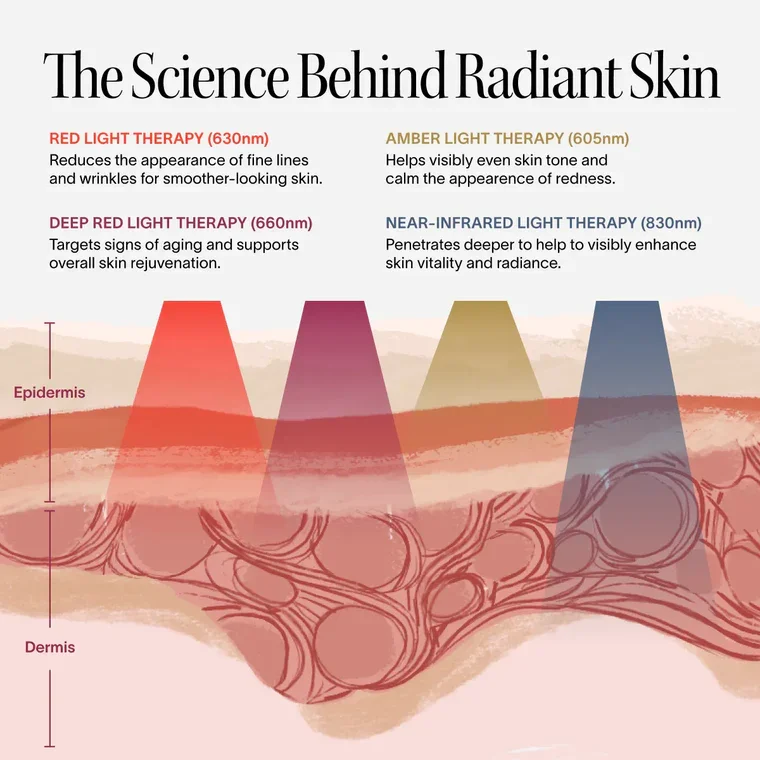
How therapeutic red and near-infrared light interacts with the skin — promoting collagen, calmness and long-term rejuvenation.
Collagen: How Red Light Therapy Rebuilds Skin Structure
Collagen loss is the single biggest driver of visible ageing. As we get older, fibroblasts slow down, inflammation rises, and enzymes called MMPs begin breaking down collagen faster than the body can replace it. Red light therapy reverses these pressures by re-energising fibroblasts and shifting the skin back into a more youthful mode of behaviour.
Under PBM, fibroblasts:
produce more Type I and Type III collagen
remodel existing collagen more efficiently
improve elastin cross-linking
reduce breakdown caused by MMP enzymes
Over time, the dermal layer becomes denser, firmer and more organised, giving skin that lifted, smoother look that no topical cream can replicate. Clients often report that their makeup sits better, their pores appear tighter, and their skin looks “alive” again - a reflection of deeper structural change.
Inflammation, Redness & Sensitive Skin
Modern skin stress - pollution, UV, cortisol, poor sleep, heated environments — places the skin in a constant low-grade inflammatory state. Red light therapy helps correct this by reducing pro-inflammatory cytokines like IL-6, TNF-α and CRP, while supporting the antioxidant enzymes that protect skin from oxidative stress.
This creates a calmer, more resilient environment for the skin to function in. People with rosacea-prone skin, easily aggravated complexions, or chronic redness often notice improvements within the first few weeks.
The effect isn’t simply soothing - it is a biological recalibration.
Acne, Breakouts & Post-Inflammatory Marks
Acne is more than clogged pores. It involves immune activation, inflammation, sensitivity, bacteria, hormonal shifts and slow healing. Red light therapy addresses several of these factors at once:
It reduces inflammation inside active breakouts
It calms immune over-response
It improves circulation needed for waste clearance
It accelerates the healing of lesions
It reduces the appearance of post-inflammatory erythema (PIE)
It supports a stronger skin barrier, making future breakouts less aggressive
Clients with adult acne or stress-triggered breakouts often see the most profound shifts - not because the red light “targets acne,” but because it restores the conditions in which the skin can resolve breakouts more effectively.
Pigmentation: Evening Out Tone From the Inside Out
Hyperpigmentation and melasma involve melanocyte overstimulation, inflammation and oxidative stress - three areas influenced by photobiomodulation. Red light therapy helps regulate pigmentation through:
reducing inflammatory triggers
supporting healthy cell turnover
improving microcirculation
decreasing oxidative pressure on pigment cells
While it doesn’t bleach or lighten the skin, it helps restore balance so that pigmentation becomes less reactive and more uniform over time. This is particularly important for clients who flare easily or who have pigmentation linked to hormonal changes, stress or heat.
Scar Healing & Skin Repair
Scars represent a disruption in the normal architecture of the skin. Collagen fibres become disorganised and stiff while the surrounding tissue remains inflamed and poorly vascularised. By increasing ATP and nitric oxide, red light therapy improves the environment in which skin repairs itself.
This leads to:
softer scar texture
smoother collagen alignment
improved elasticity
faster post-procedure healing
reduced redness and thickness
This is relevant for acne scarring, surgical scars, post-inflammatory marks and even stretch marks, where fibroblast performance is essential for improvement.
Why Full-Body Red Light Therapy Works Better Than Facial LEDs
LED masks and handheld devices can improve the skin — but their reach is limited. They treat only the epidermis and a shallow portion of the dermis, and they don’t influence the systemic factors that drive skin health.
The NovoTHOR system at ReGen Rooms treats the entire body at once.
This creates a level of benefit no facial device can match:
systemic inflammation is reduced
circulation improves throughout the body
cortisol levels normalise
mitochondrial function increases globally
recovery becomes more efficient
hormonal stress responses calm down
All of these internal processes directly influence the skin.
This is why clients often see faster, more dramatic skin results with full-body PBM compared to at-home LEDs — because their whole system is functioning better.
How Long Until You See Results?
Skin follows natural biological cycles, so improvements happen gradually and sustainably.
You may notice:
a healthier glow within 1–3 sessions
calmer, less reactive skin within 2–4 weeks
improved texture and tone by week 6
visible collagen changes by weeks 8–12
deeper structural improvements with long-term use
The key is consistency. Because you’re working with collagen-forming pathways, circulation and mitochondrial performance, the benefits build cumulatively.
Blue Light Therapy: Targeting Acne, Bacteria and Surface Inflammation
While red and near-infrared wavelengths work deep within the dermis, blue light therapy focuses on the skin’s surface - where acne-causing bacteria and inflammatory responses begin.
Blue light (typically around 415nm) has a unique antibacterial effect. It interacts with porphyrins produced by Cutibacterium acnes (formerly P. acnes). When blue light activates these porphyrins, they create small bursts of reactive oxygen species that damage bacterial cell walls - effectively reducing the population without disrupting the skin barrier.
But the benefits aren’t limited to breakouts. Blue light also:
reduces surface inflammation that contributes to redness and sensitivity
helps normalise oil production
reduces the frequency of new blemishes
improves clarity and evening of tone in congested, dull or combination skin
When combined with red or deep-red wavelengths, the effect becomes synergistic: blue light calms and clears the surface, while red light repairs and restores at the cellular level.
This dual approach is ideal for clients with acne, hormonal flares, stress-related breakouts or post-inflammation redness.
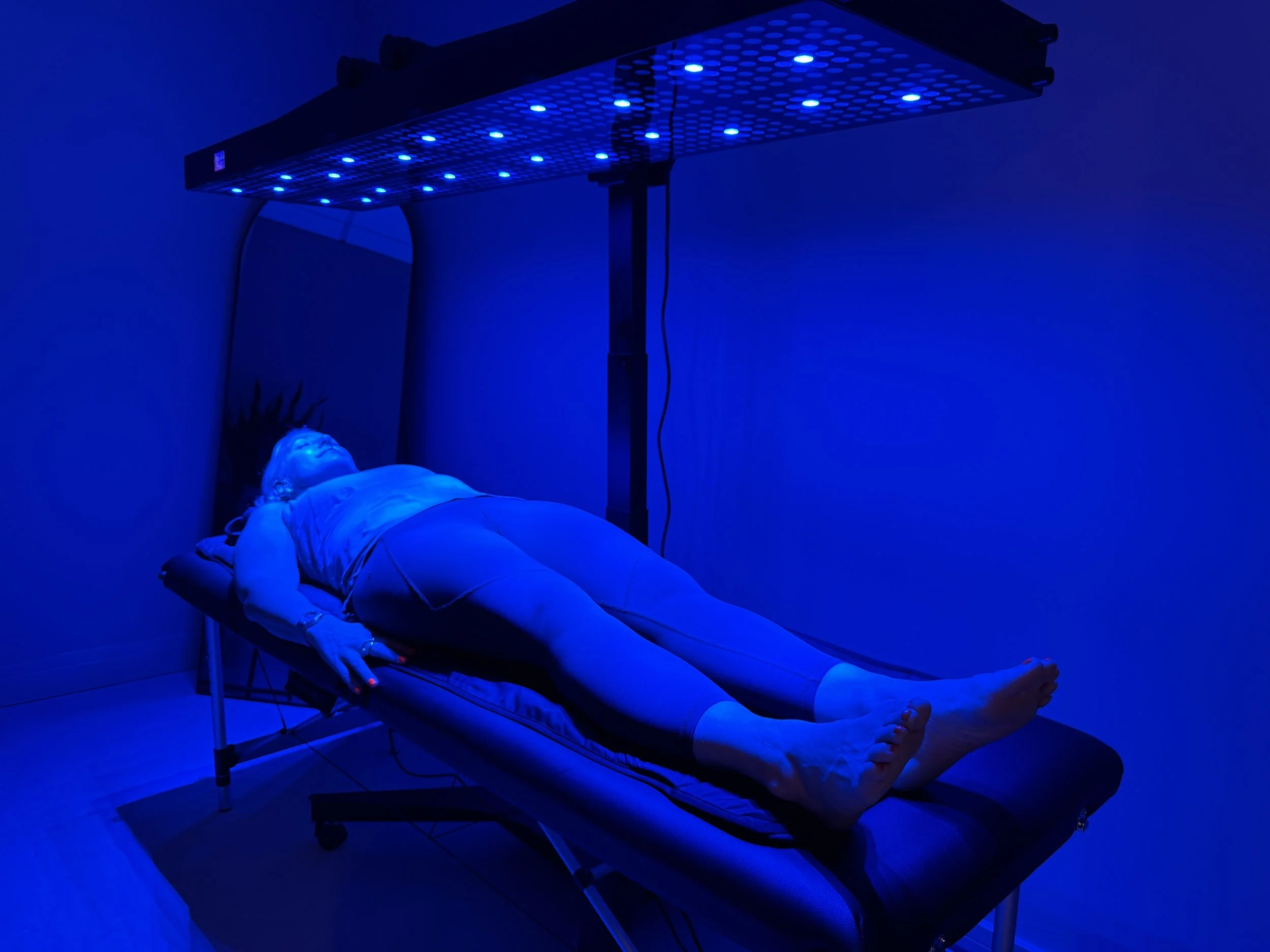
Blue light therapy targets surface inflammation and breakouts for clearer, calmer skin.
How Infrared Sauna Complements Red Light for Skin Health
Your infrared sauna doesn’t act on the skin the same way red light does; instead, it works on the circulatory, lymphatic and detoxification systems that feed the skin.
Unlike traditional saunas, far-infrared wavelengths penetrate into muscle and connective tissue, gently raising core temperature. This controlled hyperthermic response:
increases blood flow to the skin
boosts oxygen and nutrient delivery
stimulates lymphatic drainage
accelerates removal of metabolic waste, pollutants and inflammatory by-products
activates heat shock proteins (HSPs) that help repair damaged cells
The result is a clearer, brighter, more resilient complexion - especially for clients dealing with dullness, chronic congestion or slow healing.
When paired with red light therapy, the two modalities create a skin-renewal cycle:
the sauna cleanses and prepares the tissues, increasing circulation and opening detoxification pathways
red light rebuilds and regenerates, stimulating fibroblasts, restoring mitochondrial function and supporting collagen matrix integrity
For clients with inflammation-driven skin conditions (acne, rosacea, eczema, sensitivity), this combination can be transformative.
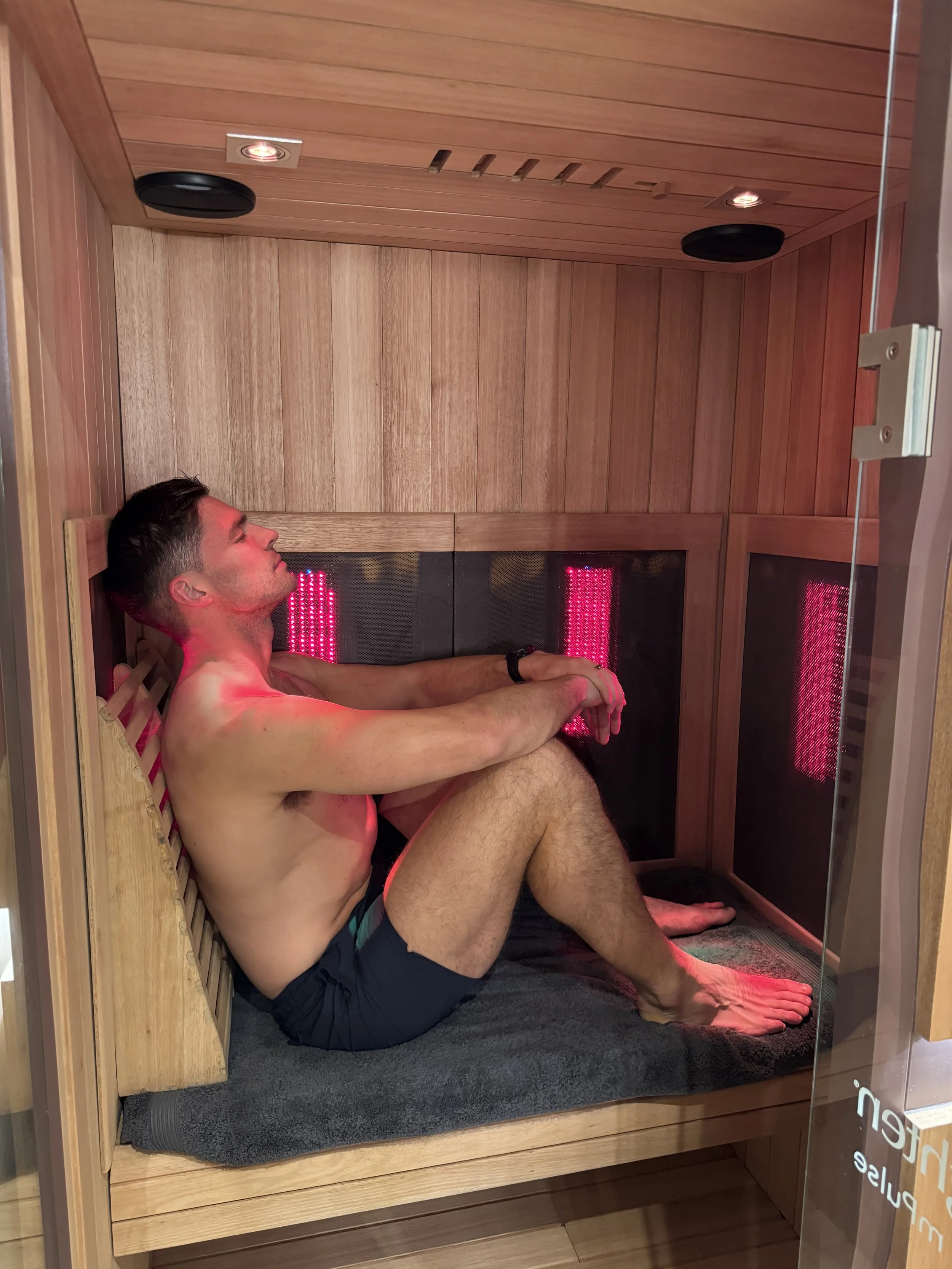
Infrared heat and red light work together to boost circulation, detoxification and full-body skin vitality.
The Takeaway: Red Light Therapy Helps Skin Behave Younger
At its core, red light therapy doesn’t just “improve the skin” - it improves the biological conditions the skin relies on every day. By restoring mitochondrial efficiency, calming inflammation, increasing collagen and supporting healing, PBM creates a foundation for stronger, clearer, healthier skin long-term.
This is why so many people find red light therapy becomes a non-negotiable part of their wellness routine. It’s not a treatment. It’s a reset button for the skin’s entire operating system.
And at ReGen Rooms, with full-body NovoTHOR exposure and a supportive recovery environment, those results are amplified.
The Skin Renewal Stack: Red Light + Blue Light + Infrared Sauna
When used together, these three therapies create a complete skin-health reset.
Blue light works on the surface, targeting acne-causing bacteria and calming inflammation.
Red light penetrates deeper into the dermis to boost collagen, repair tissue and restore cellular energy
Infrared sauna enhances circulation and lymphatic flow, helping the skin clear waste products while delivering more oxygen and nutrients to the tissues.
Stacked in sequence, they clear, repair and replenish - giving the skin a brighter, calmer and more resilient appearance than any single treatment can achieve alone.
Frequently Asked Questions
-
Yes. Red light therapy has one of the strongest evidence bases in aesthetic science. It improves skin by increasing mitochondrial energy, calming inflammation, enhancing microcirculation and stimulating fibroblasts to produce fresh collagen and elastin. These cellular changes translate into smoother texture, brighter tone, firmer skin and faster healing.
-
Red and near-infrared wavelengths activate cytochrome c oxidase inside mitochondria, increasing ATP — the fuel fibroblasts use to build collagen. At the same time, PBM reduces collagen-damaging enzymes (MMPs) and supports healthy elastin cross-linking. The result is a gradual increase in dermal density and firmness.
-
Red light therapy doesn’t bleach the skin, but it improves the underlying biology behind pigmentation disorders. By reducing inflammation, oxidative stress and melanocyte overstimulation, PBM helps even out tone and reduce the intensity of pigmentation over time, especially when paired with good pigmentation skincare.
-
Yes. It supports the core mechanisms that keep skin youthful - collagen production, mitochondrial energy, cellular turnover and controlled inflammation. Over time, this results in softer fine lines, smoother texture and more resilient skin that behaves “younger” on a cellular level.
-
Most people notice a healthier glow and reduced redness within 1–3 sessions. Deeper collagen changes generally appear around 6–12 weeks, depending on consistency. Because fibroblast activity builds gradually, benefits accumulate over time.
-
For best results, we recommend 2–3 sessions per week for the first month, then 1–2 per week for ongoing improvement. Once you’ve reached your desired results, weekly or fortnightly sessions help maintain collagen activity and skin resilience.
-
Yes - in fact, many clients with reactive or inflamed skin find red light therapy soothing. PBM reduces inflammatory mediators, supports barrier repair and improves microcirculation, making it ideal for redness, irritation and sensitive skin conditions.
-
Absolutely. Red light therapy enhances the results of skincare, peels, microneedling and facials because it improves healing, reduces inflammation and increases cellular energy. Many dermatologists and aestheticians use PBM immediately after treatments for faster recovery and better outcomes.
-
Yes. Facial masks treat only the surface, while full-body systems like NovoTHOR improve cellular energy, inflammation and circulation throughout the body. Because your skin is influenced by internal factors — hormones, stress, inflammation — full-body PBM produces broader and often faster results.
-
Yes. PBM improves collagen remodelling, softens scar tissue, reduces redness and supports healthier repair. It won’t erase a scar completely, but it can significantly improve texture, tone and elasticity over time.
-
Yes. Red light therapy is non-invasive, non-thermal and has no known long-term risks. It doesn’t damage tissue — it restores it. PBM has been used in clinical research for decades, and its safety profile is one of the strongest in wellness science.
Scientific References:
Avci P. et al. “Low-level laser (light) therapy in skin.” Semin Cutan Med Surg (2013). https://pubmed.ncbi.nlm.nih.gov/24049929/
Barolet D. “LED photorejuvenation: clinical evidence.” J Cosmet Laser Ther (2008). https://pubmed.ncbi.nlm.nih.gov/18446409/
Lee SY. et al. “A controlled trial on LED phototherapy for photoaged skin.” Dermatol Surg (2007). https://pubmed.ncbi.nlm.nih.gov/17661943/
Kim H. & Choi JW. “Effects of PBM on inflammation and mitochondrial function.” Lasers Med Sci (2021). https://pubmed.ncbi.nlm.nih.gov/26796709/
de Freitas LF, Hamblin MR. “Photobiomodulation and cellular metabolism.” J Photochem Photobiol B (2016). https://pubmed.ncbi.nlm.nih.gov/32862336/
Mamalis A. “Red light therapy and collagen modulation.” Aesthet Surg J (2018). https://pubmed.ncbi.nlm.nih.gov/29365035/
Fröhlich H., et al. “Photobiomodulation for wound healing and tissue repair.” Biomedicines (2022). https://pubmed.ncbi.nlm.nih.gov/36362538/
Calderhead R. “The therapeutic use of light-emitting diodes (LEDs).” J Cosmet Laser Ther (2017). https://pubmed.ncbi.nlm.nih.gov/29251204/
Ablon G. “Phototherapy with light-emitting diodes for the treatment of acne.” J Clin Aesthet Dermatol (2018). https://pubmed.ncbi.nlm.nih.gov/29595418/
Jagdeo J., et al. “Red light and near-infrared phototherapy: mitochondrial mechanisms.” Photomed Laser Surg (2012). https://pubmed.ncbi.nlm.nih.gov/22895875/
