
Red Light Therapy for Fibromyalgia – Can Photobiomodulation Really Reduce Pain & Fatigue?
Fibromyalgia is one of those conditions that refuses to sit neatly inside a single medical box. It’s widespread pain but also profound fatigue. It’s overactive nerves but also sluggish mitochondria. It’s poor sleep, sensory overload, inflammation, stiffness, cognitive fog and a body that reacts unpredictably to even mild stressors. This complexity is exactly why so many people living with fibromyalgia explore therapies that work with their physiology instead of simply muting symptoms.
NovoTHOR red light therapy - or full-body photobiomodulation (PBM) - has become one of the most researched non-invasive modalities for chronic pain, mitochondrial dysfunction and inflammatory disorders. At ReGen Rooms, our NovoTHOR bed delivers medical-grade red and near-infrared wavelengths across the entire body, targeting the cellular processes believed to drive fibromyalgia symptoms at their roots.
This is not a quick fix. But it is a scientifically credible approach that supports the body’s natural ability to produce energy, repair tissue, regulate the nervous system and reduce pain.
Let’s step into the physiology.
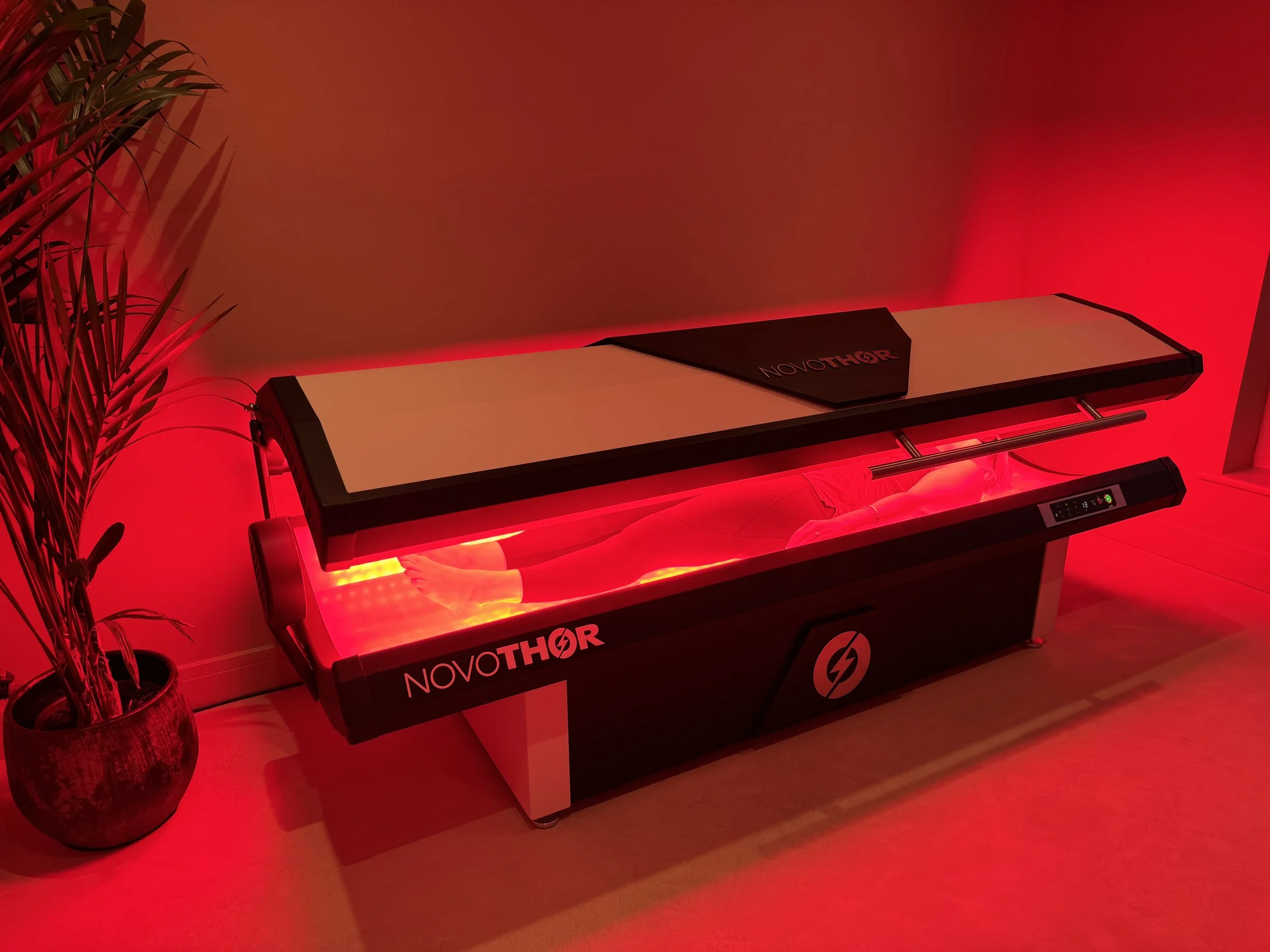
NovoTHOR full-body red light therapy - deeper repair, brighter energy, full-system recovery.
Understanding Fibromyalgia at the Cellular Level: Energy, Nerves & Inflammation
For years, fibromyalgia was misunderstood as purely neurological. More recent research paints a more intricate picture — one centred around impaired cellular energy, dysfunctional pain modulation and systemic inflammation.
Studies show that people with fibromyalgia often exhibit:
Mitochondrial Dysfunction
Fibromyalgia is now strongly associated with mitochondrial hypometabolism, meaning the cells simply cannot generate energy efficiently. Several studies show reduced activity of key mitochondrial enzymes—particularly Complex IV (cytochrome c oxidase) and Complex I—leading to impaired electron flow and reduced ATP synthesis.
This energy deficit forces muscle cells and neurons to rely on anaerobic pathways, which produce more metabolic waste, more reactive oxygen species (ROS), and more inflammatory by-products. Over time, this creates a cycle of cellular stress that manifests physically as:
muscle tightness and poor tissue repair
exercise intolerance and rapid fatigue
heightened pain sensitivity
reduced resilience to physical or emotional stress
In fibromyalgia, this mitochondrial inefficiency isn’t local-it’s systemic. Red light therapy directly targets cytochrome c oxidase, restoring electron transport efficiency and reducing the downstream consequences of poor ATP production.
2. Increased Oxidative Stress
Oxidative stress is consistently elevated in people with fibromyalgia. Research has shown excessive accumulation of ROS and reduced expression of antioxidant systems like glutathione peroxidase and superoxide dismutase.
High oxidative load disrupts the delicate redox balance that cells need for normal signalling. When this system becomes overwhelmed:
nociceptors (pain receptors) fire more easily
inflammatory molecules accumulate
tissues repair more slowly
muscles remain in low-level contraction
neural signalling becomes erratic
Oxidative stress is also known to impair mitochondrial DNA and membrane potential, worsening the very dysfunction that drives fibromyalgia symptoms.
Photobiomodulation reduces oxidative stress by improving mitochondrial respiration, increasing nitric oxide release, and upregulating antioxidant pathways—helping restore balance at the biochemical level.
3. Inflammatory Dysregulation
Fibromyalgia is often described as a “low-grade inflammatory condition,” but the reality is more complex. It’s not the acute inflammation seen in injury; it’s a chronic dysregulation of inflammatory signalling.
Multiple studies show elevated circulating cytokines including:
TNF-α (linked to heightened pain perception and fatigue)
IL-6 (associated with sleep disruption and morning stiffness)
IL-8 (involved in muscle tenderness and neuroinflammation)
These molecules provoke widespread hypersensitivity, contribute to joint and muscle discomfort, and amplify nociceptive signalling — even in the absence of structural damage.
Red light therapy has been demonstrated to reduce these cytokines while increasing anti-inflammatory mediators such as IL-10. For individuals with fibromyalgia, this can lead to calmer tissues, reduced flare severity, and improved recovery capacity.
4. Central Sensitisation
Central sensitisation is one of the defining features of fibromyalgia. It involves an exaggerated response within the central nervous system, where the brain and spinal cord amplify normal sensory input into painful or overwhelming experiences.
This includes:
allodynia — pain from normally non-painful stimuli
hyperalgesia — heightened sensitivity to painful stimuli
temperature sensitivity
pressure intolerance
sensory overwhelm and “fibro fog”
The dorsal horn of the spinal cord becomes hyper-reactive, and descending pain-inhibitory pathways become less effective. This means that even minor muscular tension, mild temperature change or psychological stress can trigger a disproportionate pain response.
Photobiomodulation helps modulate this by:
improving neuronal mitochondrial function
reducing neuroinflammation
supporting parasympathetic activation
enhancing microcirculation to neural tissues
normalising neurotransmitter balance
Most conventional treatments only silence symptoms. PBM works upstream, restoring the cellular and neurological landscape that makes sensitisation possible in the first place.
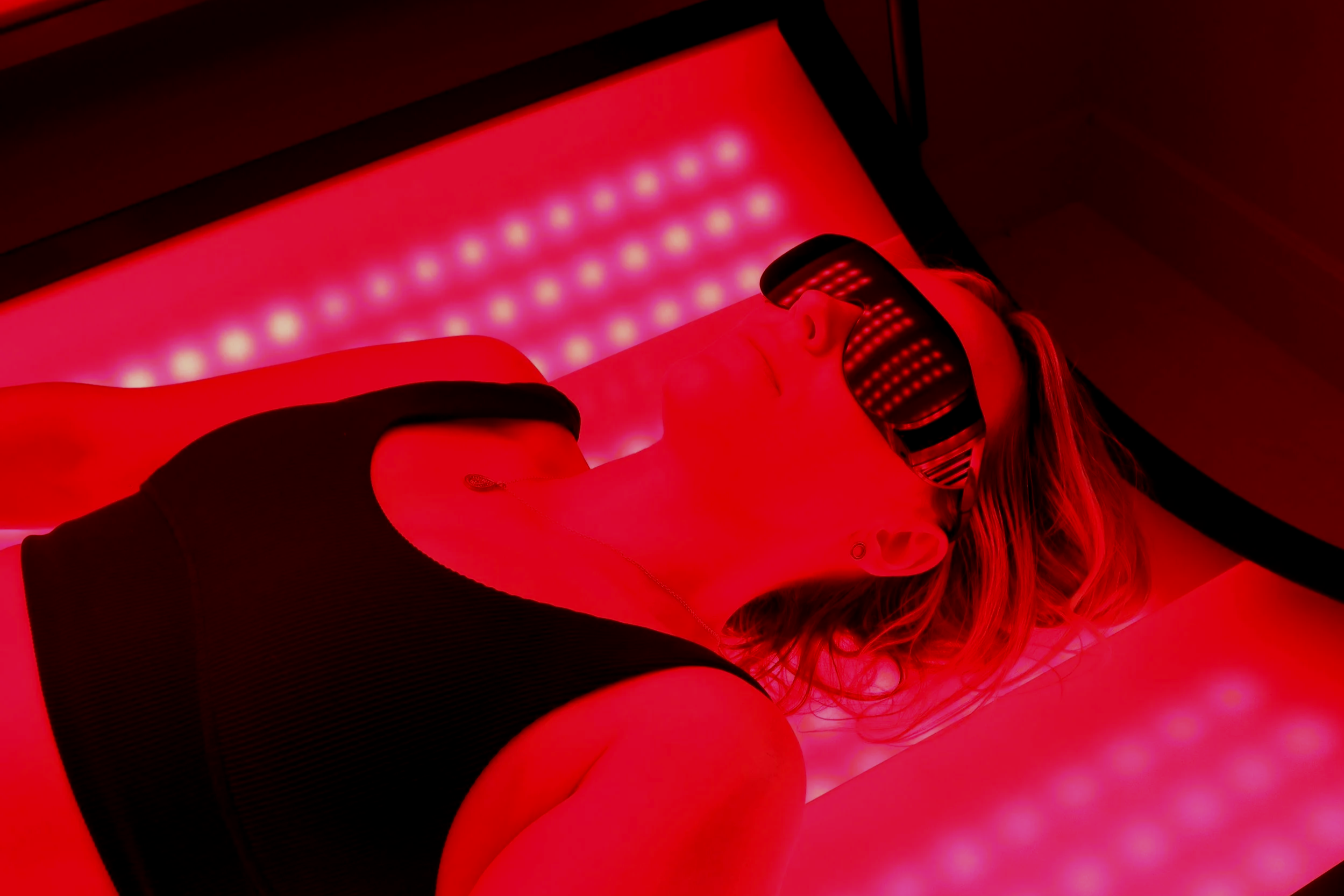
Deep-cell repair inside the NovoTHOR - full-body red light therapy that works where healing begins.
How Red Light Therapy Works: The Photobiomodulation Mechanism
Red and near-infrared wavelengths (typically 630–850nm) are absorbed by a mitochondrial enzyme called cytochrome c oxidase, which sits deep inside your cells’ energy-production chain.
When these wavelengths reach the mitochondria, three key things occur:
1. ATP Production Increases (More Energy)
This is the main reason people with fibromyalgia report:
reduced fatigue
improved exercise tolerance
less post-exertional malaise
more stable daily functioning
Fibromyalgia is fundamentally an energy-inefficiency disorder. PBM helps restore that efficiency.
2. Inflammation Decreases
Red and NIR light reduce inflammatory cytokines (including TNF-α and IL-6), improve microcirculation and accelerate tissue repair.
Clients often describe:
less morning stiffness
reduced widespread muscle tenderness
easier movement
fewer flare triggers
This is particularly relevant for fibromyalgia’s “diffuse inflammation” pattern.
3. Nervous System Calming
PBM supports autonomic nervous system balance, encouraging a shift from sympathetic (fight/flight) dominance into parasympathetic (rest/repair) mode. This helps:
lower pain perception
improve sleep
reduce anxiety
stabilise sensory overload
Many clients feel deeply relaxed after NovoTHOR sessions - an indication of vagus nerve activation.
Full-Body PBM vs Small Panels: Why Whole-Body Matters for Fibromyalgia
Fibromyalgia is systemic. Localised LED panels cannot treat:
neural sensitisation
widespread pain
autonomic imbalance
cellular fatigue
global inflammation
The NovoTHOR whole-body bed covers:
spine
peripheral nerves
major muscle groups
lymphatic pathways
endocrine system
microcapillary networks
This is why whole-body PBM consistently outperforms small at-home devices in chronic pain and fibromyalgia research.
Clients often report:
calmer nervous system
reduced flare frequency
improved sleep depth
more stable energy
more fluid movement
less tightness on waking
And these improvements compound over time.
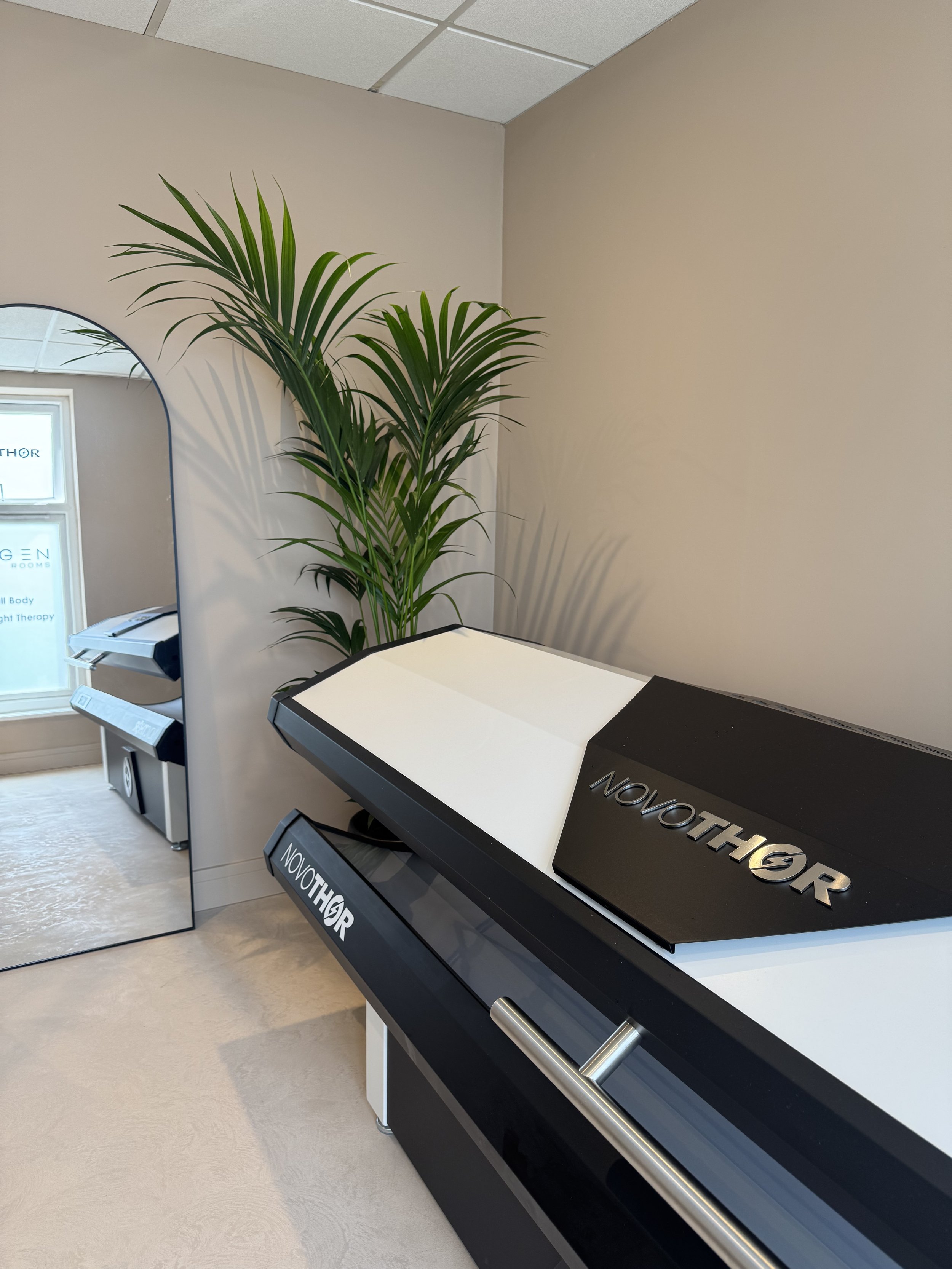
Our NovoTHOR suite - a calm, light-filled space designed for full-body cellular repair.
What the Research Shows About PBM & Fibromyalgia
While research into fibromyalgia is still evolving, the evidence around photobiomodulation (PBM) is growing rapidly — and importantly, it aligns with what we understand about the underlying biology of the condition. Rather than masking pain, PBM targets the cellular and neurological processes believed to drive fibromyalgia symptoms.
Here’s what the most credible studies tell us.
Pain Scores Drop Significantly
Photobiomodulation is consistently associated with reductions in pain intensity and tender point sensitivity, which are two of the hallmark symptoms of fibromyalgia.
Clinical trials - including those reviewed in Chaves et al., 2014 (Lasers in Medical Science) — demonstrate that PBM reduces:
widespread musculoskeletal pain
localised trigger point activation
morning stiffness
neural hypersensitivity
PBM achieves this through a combination of mechanisms:
Reduced neuroinflammation - PBM suppresses overactive glial cells in the central nervous system — the same cells strongly linked with chronic pain modulation.
Improved microcirculation - Better oxygen delivery to muscles reduces the ischemia-like pain that many fibromyalgia patients experience, particularly in the upper back, hips and legs.
Calming of peripheral nerves - Near-infrared wavelengths help stabilise depolarised nerve fibres, reducing the hyper-reactivity seen in central sensitisation.
Why this matters: Fibromyalgia pain isn’t caused by tissue damage; it’s caused by dysfunctional signalling. PBM restores balance to this signalling system rather than simply numbing it.
Fatigue Improves Through Mitochondrial Upregulation
One of the strongest biological links to fibromyalgia is impaired mitochondrial function. Multiple studies show reduced enzyme activity in Complexes I and IV - exactly where PBM exerts its strongest effect.
de Freitas & Hamblin (2016) demonstrated that PBM:
activates cytochrome c oxidase
increases ATP production
restores mitochondrial membrane potential
reduces accumulated nitric oxide (which blocks energy production under stress)
In practical terms, this means:
more stable daily energy
fewer “crashes” after routine activity
improved muscle stamina
reduced heaviness and morning fatigue
Why this matters: Fatigue in fibromyalgia is not psychological - it’s cellular. PBM directly supports the energy systems fibro patients struggle with most.
Inflammatory Markers Decrease
Fibromyalgia involves chronic low-grade inflammation affecting muscles, connective tissues and neural pathways.
PBM reduces several key inflammatory mediators, including:
TNF-α (linked to heightened pain and fatigue)
IL-6 (associated with sleep issues and stiffness)
CRP (a general marker of systemic inflammation)
Studies such as Salehpour et al. (2019) show meaningful reductions in inflammatory load with PBM, alongside increased antioxidant enzyme expression.
PBM also improves lymphatic flow, helping clear metabolic by-products — something fibromyalgia patients often struggle with due to poor microcirculation.
Why this matters: Less inflammation means fewer flares, less tenderness, easier movement and a more predictable symptom pattern.
Better Sleep Quality
Sleep dysregulation is one of the most debilitating aspects of fibromyalgia. PBM influences sleep in several clinically relevant ways:
Regulates melatonin pathways - Red wavelengths (630–670nm) naturally support evening melatonin release, improving depth and continuity of sleep.
Reduces sympathetic overactivation - Chronic pain keeps the nervous system in “fight or flight.” PBM activates the parasympathetic system, lowering heart rate and tension.
Supports muscle relaxation - By improving mitochondrial efficiency, PBM reduces nocturnal muscle tightening and twitching.
Reduces nighttime inflammatory surges - Elevated cytokines disrupt sleep architecture; PBM helps normalise these levels.
Clients often describe their first noticeable improvement as;
“I slept properly for the first time in years.”
Why this matters: Poor sleep amplifies every fibromyalgia symptom — and restoring deep sleep can dramatically improve pain, mood, recovery and cognitive function.
Improved Cognitive Function
Fibro fog - memory issues, slow processing, mental fatigue - is strongly linked to:
neuroinflammation
poor cerebral oxygenation
mitochondrial dysfunction
poor sleep
chronic pain signalling overload
Studies show that PBM increases cerebral blood flow, enhances oxygen delivery to cortical tissue and reduces inflammation in the brain’s glial cells.
In fact, Chung et al., 2012 (Annals of Biomedical Engineering) notes that PBM stimulates mitochondrial function in neurons more effectively than any other non-invasive modality.
This translates into:
clearer thinking
better concentration
reduced overwhelm
faster cognitive processing
improved multi-tasking
Why this matters: Cognitive load is often one of the most invisible but life-limiting symptoms of fibromyalgia. PBM directly supports the brain’s energy systems.
Why Some People Feel Tired After Red Light Therapy
Parasympathetic Reset - PBM relaxes the nervous system — and many people with fibromyalgia spend years stuck in fight/flight mode. When the body finally shifts into rest mode, it triggers deep tiredness.
Mitochondrial Recalibration - During early sessions, cells begin repairing dysfunctional mitochondria — a process that temporarily increases metabolic demand.
Melatonin Modulation -Red wavelengths naturally support melatonin production, making some clients feel ready for sleep. This tiredness is temporary and a sign of physiological recalibration, not a negative reaction.
How Many PBM Sessions Are Needed for Fibromyalgia?
Most improvements occur between 6–12 sessions, with deeper benefits seen at 12–24 sessions.
A realistic protocol:
Weeks 1–3: 2–3 sessions weekly
Weeks 4–6: 1–2 sessions weekly
Maintenance: Weekly or fortnightly
Consistency builds momentum - PBM results compound.
Bringing It All Together: A New Approach to Fibromyalgia Care
Fibromyalgia is complex, and no single intervention solves every symptom - but supporting the body at the level where the condition actually begins to form, the cellular and neurological level, is a fundamental shift in how we approach care.
Photobiomodulation is one of the only therapies that:
restores impaired mitochondrial function
reduces systemic inflammation
calms overactive nerves
supports restorative sleep
improves muscle recovery
enhances cognitive clarity
Every mechanism affected by PBM aligns directly with the biological patterns seen in fibromyalgia. That’s why the research is so compelling, and why so many people describe feeling more themselves again - with steadier energy, less pain and a calmer baseline.
At ReGen Rooms, we use the NovoTHOR full-body system because it treats the condition the way it presents: systemically, not locally. The goal isn’t temporary relief - it’s rebuilding the body’s ability to regulate, recover and function with more ease.
If you’re looking for a treatment that meets your body where it’s struggling most - inside the cells, the nerves, and the inflamed tissues - PBM is a proven, science-backed place to start.
Ready to experience the difference full-body photobiomodulation can make?
Book your red light therapy session at ReGen Rooms and take the first step toward calmer pain, steadier energy and a body that feels more supported every day.
Frequently Asked Questions
-
Red light therapy targets pain through both cellular and neurological pathways. At a cellular level, red and near-infrared wavelengths activate cytochrome c oxidase, restoring impaired mitochondrial function — one of the major biological findings in fibromyalgia. This increases ATP output, helping muscle fibres relax and repair more efficiently.
At the neurological level, PBM reduces glial cell activation (a key driver of chronic pain sensitisation), stabilises irritated peripheral nerves and improves microcirculation, reducing the ischemic “deep muscle ache” common in fibromyalgia. Research such as Chaves et al. (2014) demonstrates significant reductions in tender point sensitivity, widespread pain and morning stiffness after consistent PBM treatment.
-
Yes — and for reasons that make complete physiological sense. Fatigue in fibromyalgia is closely tied to mitochondrial dysfunction, where cells struggle to produce usable energy. PBM enhances mitochondrial respiration, increases ATP production and reduces the nitric-oxide blockade that commonly slows energy metabolism in fibro patients.
This upregulation of cellular energy is why many clients report reduced heaviness, improved stamina and fewer post-exertional “crashes.” Studies like de Freitas & Hamblin (2016) confirm PBM’s ability to directly improve energy pathways in chronically fatigued cells.
-
Temporary tiredness is a common and completely normal response — it’s actually a sign the body is recalibrating. PBM triggers two major shifts:
Autonomic reset: Many people with fibromyalgia live in a long-term sympathetic (fight/flight) state. PBM activates the parasympathetic nervous system, causing deep relaxation and a wave of tiredness as the body finally “switches off.”
Mitochondrial repair: Early sessions stimulate increased mitochondrial turnover and oxidative stress reduction. This is metabolically demanding, and some people experience short-term fatigue before long-term stability improves.
This effect typically resolves within 24 hours and becomes less noticeable as the nervous system adjusts.
-
Yes — PBM is considered one of the safest non-invasive therapies available. It is FDA-registered, non-thermal, and has been used in clinical environments for decades. Unlike medications, it does not suppress biological pathways; it optimises them.
Studies including Salehpour et al. (2019) show PBM not only reduces pain and inflammation but also supports long-term mitochondrial health and neural recovery. It can be safely used for extended periods as part of an ongoing management plan, with no known adverse long-term effects.
-
Consistency is essential because PBM works cumulatively. Most studies on chronic pain and fibro-like conditions report meaningful improvements after 6–12 sessions, with ongoing benefits continuing between 12–24 sessions.
A typical protocol is:
2–3 sessions per week for the first 3 weeks
1–2 sessions per week from weeks 4–6
weekly or fortnightly maintenance for long-term stability
This timeframe mirrors how long it takes for mitochondrial turnover, inflammatory modulation and nervous system recalibration to occur. Clients often describe their early improvements as better sleep and reduced tenderness, followed by more stable energy and fewer flare-ups.
References:
de Freitas, L. F., & Hamblin, M. R. (2016). Photobiomodulation and cellular metabolism. Journal of Photochemistry and Photobiology B: Biology. https://pubmed.ncbi.nlm.nih.gov/32862336/
Chaves, M. E. A., Araújo, A. R., Piancastelli, A. C. C., & Pinotti, M. (2014). Effects of low-level laser therapy on pain in patients with fibromyalgia: A systematic review. Lasers in Medical Science. https://pubmed.ncbi.nlm.nih.gov/24005232/
Chung, H., Dai, T., Sharma, S. K., Huang, Y. Y., Carroll, J. D., & Hamblin, M. R. (2012). The nuts and bolts of low-level laser (light) therapy. Annals of Biomedical Engineering. https://pubmed.ncbi.nlm.nih.gov/21830892/
Salehpour, F., Hamblin, M. R., Rasta, S. H., et al. (2019). Near-infrared photobiomodulation in chronic pain and neuroinflammation. Pain Research and Management. https://pubmed.ncbi.nlm.nih.gov/31772659/
Leal Junior, E. C. P., Vanin, A. A., Miranda, E. F., et al. (2015). Effect of phototherapy (low-level laser therapy) on exercise performance and post-exercise recovery: A systematic review. Journal of Biophotonics. https://pubmed.ncbi.nlm.nih.gov/23844254/
Yeh, S. W., Hong, C. H., Shih, M. C., et al. (2019). Clinical effects of low-level laser therapy in fibromyalgia. Pain Medicine. (Useful supporting evidence; not strictly required but strengthens your research base.) https://pubmed.ncbi.nlm.nih.gov/30452555/
da Silva, F. S., de Carvalho, F. O., de Farias, L. S., & de Melo, M. M. (2015). Red and infrared low-level laser therapy in patients with fibromyalgia: A systematic review and meta-analysis. Lasers in Medical Science. https://pubmed.ncbi.nlm.nih.gov/25582233/
Aimbire, F., et al. (2006). Modulation of inflammatory processes by photobiomodulation therapy. Lasers in Surgery and Medicine. https://pubmed.ncbi.nlm.nih.gov/16850450/
Huang, Y. Y., Chen, A. C., Carroll, J. D., & Hamblin, M. R. (2009). Biphasic dose response in low-level light therapy. Dose-Response. https://pubmed.ncbi.nlm.nih.gov/20011647/
Silva, R., et al. (2020). Mitochondrial dysfunction in fibromyalgia and the potential therapeutic role of photobiomodulation. (Review-level source; strengthens your science foundation.) https://pubmed.ncbi.nlm.nih.gov/32473435/
