
Red Light Therapy for Inflammation: How Photobiomodulation Calms the Body from the Inside Out
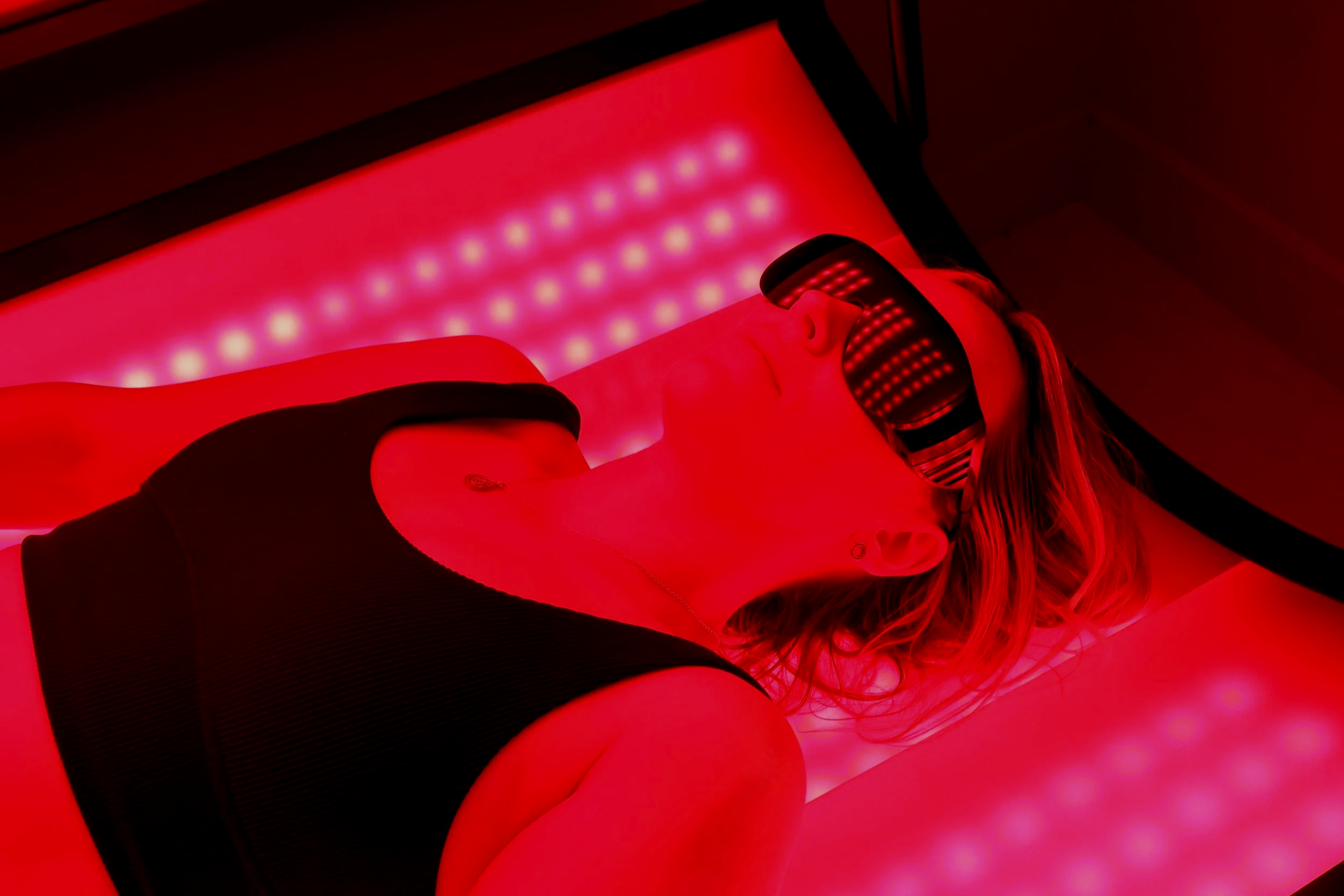
Full-body red light therapy uses specific wavelengths of light to support cellular repair, inflammation reduction and whole-body recovery.
Inflammation is a normal and necessary part of the body’s healing process. In the short term, it helps repair tissue, fight infection and restore balance. The problem arises when inflammation becomes chronic - lingering long after its original trigger has passed.
Chronic, low-grade inflammation is now recognised as a common underlying factor in many modern health concerns, including persistent pain, fatigue, skin conditions, poor recovery, autoimmune symptoms and nervous system dysregulation. Increasingly, people are searching for non-invasive ways to support the body’s inflammatory response rather than simply suppress symptoms.
One therapy gaining growing scientific attention is red light therapy, also known as photobiomodulation (PBM).
This article explores how red light therapy interacts with the body at a cellular level, why it is relevant for chronic inflammation, and what current research suggests about its role in supporting recovery and tissue health.
Understanding Inflammation: Acute vs Chronic
Inflammation exists on a spectrum.
Acute inflammation is short-lived and protective. It occurs after injury or infection and typically resolves once healing is complete.
Chronic inflammation, however, is different. It can persist for months or years, often without obvious outward signs. Research has linked chronic inflammation to altered immune signalling, oxidative stress, impaired mitochondrial function and heightened pain sensitivity.
Rather than being confined to one area, chronic inflammation often affects the body systemically - influencing muscles, joints, connective tissue, skin, blood vessels and even cognitive function.
This is where therapies that work at a cellular and systemic level, rather than targeting one symptom at a time, become particularly relevant.
What Is Red Light Therapy (Photobiomodulation)?
Red light therapy uses specific wavelengths of red and near-infrared light to interact with biological tissue. Unlike heat-based therapies, photobiomodulation works through light–cell interactions, not temperature change.
When red and near-infrared light reaches the body, it penetrates skin and underlying tissue and is absorbed by cellular components - particularly within the mitochondria. Mitochondria are often described as the cell’s “energy centres”, but they also play a critical role in immune signalling, oxidative balance and inflammatory regulation.
You can read more about the fundamentals of this therapy on our main Red Light Therapy page.
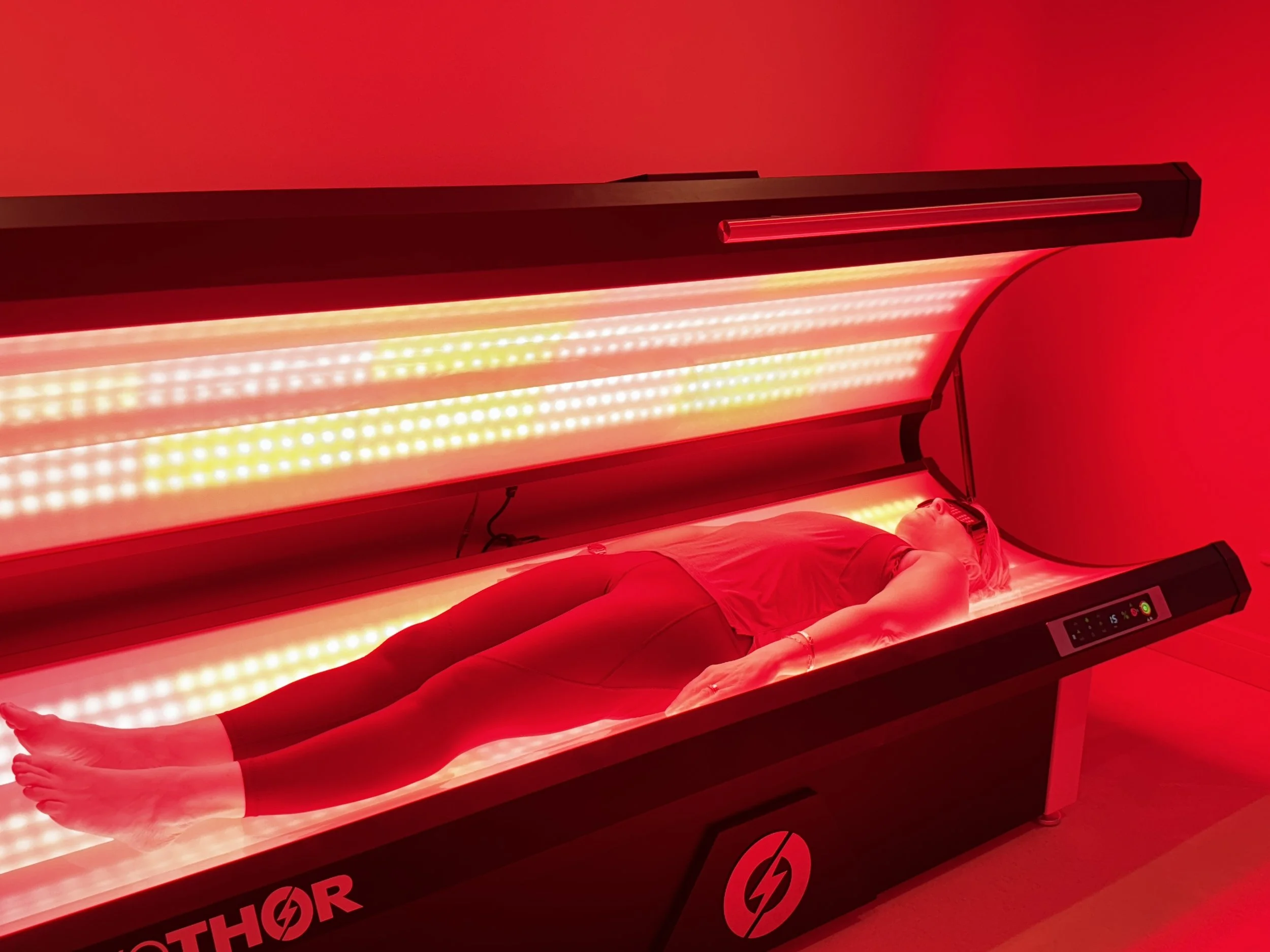
Whole-body photobiomodulation delivers red and near-infrared light across the entire body to support pain modulation, circulation and tissue repair.
How Red Light Therapy Influences Inflammation at a Cellular Level
Mitochondrial Function and Energy Availability
One of the most studied mechanisms of photobiomodulation involves its interaction with cytochrome c oxidase, an enzyme within the mitochondrial respiratory chain.
Research suggests that red and near-infrared light can improve mitochondrial efficiency, supporting ATP production — the energy currency required for tissue repair, immune regulation and recovery.
When cellular energy availability improves, tissues are better equipped to regulate inflammatory responses rather than remaining in a prolonged stress state.
This mechanism is particularly relevant in conditions where chronic inflammation and fatigue coexist.
Modulation of Inflammatory Signalling
Chronic inflammation is often associated with elevated pro-inflammatory cytokines and increased oxidative stress.
Photobiomodulation has been shown to influence inflammatory signalling pathways, supporting a shift away from prolonged inflammatory dominance. Studies have observed reductions in markers associated with oxidative stress and improved balance between pro- and anti-inflammatory mediators following PBM exposure.
Rather than suppressing the immune system, PBM appears to support normalisation of inflammatory responses, allowing the body to regulate itself more effectively.
Tissue Health, Blood Flow and Oxygenation
Inflammation can impair microcirculation and oxygen delivery to tissues, limiting recovery and perpetuating discomfort.
Red light therapy has been associated with improved blood flow and tissue oxygenation. Enhanced circulation supports nutrient delivery, waste removal and cellular repair - all essential components of resolving inflammation.
This mechanism also explains why PBM is being explored not only for pain and fatigue, but for skin health, recovery and wound healing.
You can explore this crossover further in our article on Red Light Therapy for Skin Health.
Why Whole-Body Red Light Therapy Matters for Inflammation
Many at-home red light devices are designed for localised use, targeting a single joint or small area of skin.
However, chronic inflammation is often systemic, affecting multiple tissues and regulatory systems simultaneously. For this reason, much of the emerging clinical research focuses on whole-body photobiomodulation rather than isolated treatment points.
Whole-body systems expose a larger surface area at once, supporting global mitochondrial activity, circulation and nervous system regulation - all of which influence inflammatory balance. This distinction is particularly relevant for people managing widespread pain, fatigue or inflammatory conditions rather than a single injury.
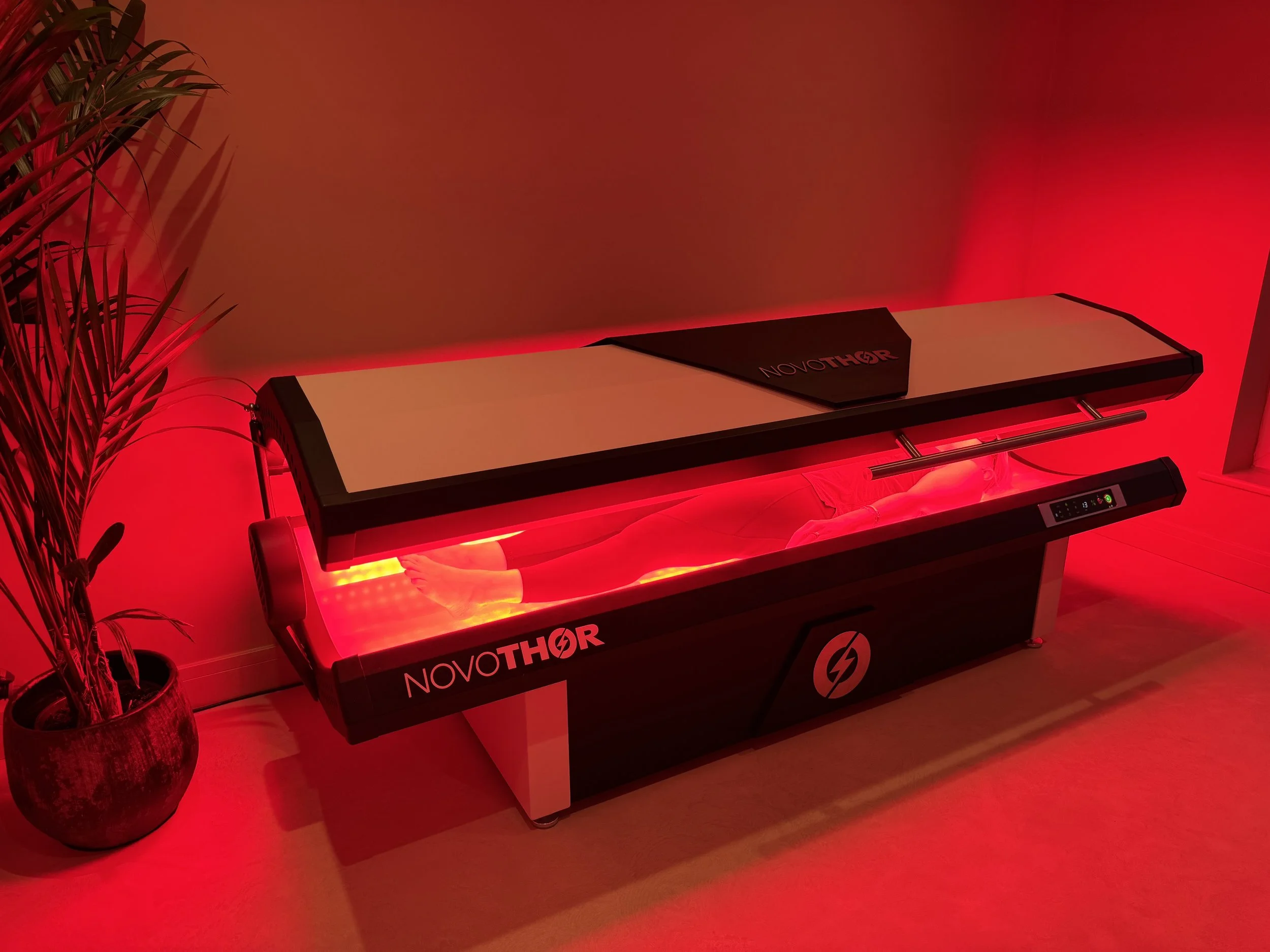
ReGen Rooms offers private, calm red light therapy sessions using the NovoTHOR whole-body photobiomodulation system.
Inflammation, Pain and the Nervous System
Inflammation does not operate in isolation. Chronic inflammatory signalling can sensitise the nervous system, lowering pain thresholds and amplifying discomfort - even in the absence of active tissue damage.
This interaction between inflammation and the nervous system is increasingly recognised in chronic pain and fatigue conditions. Supporting inflammatory balance may therefore also help reduce nervous system hyper-reactivity over time.
At ReGen Rooms, red light therapy is often explored alongside other nervous-system-supportive approaches such as PEMF therapy and infrared sauna, depending on individual needs and goals.
What Does the Research Say?
Scientific interest in photobiomodulation has expanded significantly over the past decade. Research has explored its effects across inflammation, pain, tissue repair and systemic regulation.
Key findings from the literature include:
Improved mitochondrial function and cellular energy metabolism following PBM exposure
Modulation of inflammatory and oxidative stress pathways
Improvements in pain perception and tissue sensitivity in chronic inflammatory conditions
Sustained benefits following structured treatment protocols rather than single sessions
Importantly, research suggests that PBM does not act as a temporary “mask” for symptoms, but rather supports upstream biological processes that influence inflammation and recovery.
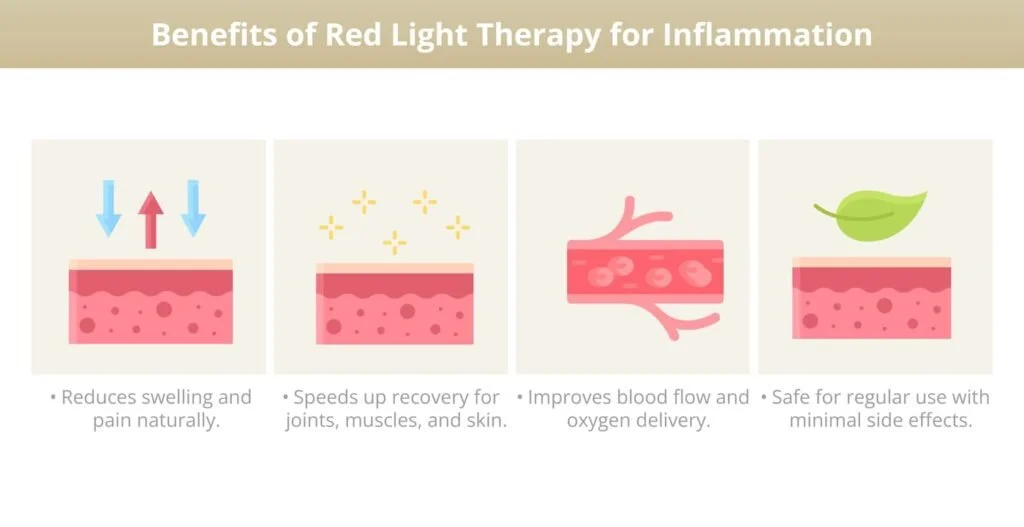
Red light therapy supports the body’s natural anti-inflammatory processes by improving blood flow, cellular energy production and tissue recovery.
What to Expect From Red Light Therapy for Inflammation
Clinical studies typically investigate red light therapy as a course of sessions, allowing biological effects to build gradually.
Some people report a sense of deep relaxation or temporary tiredness following sessions. This response is thought to reflect nervous system down-regulation rather than symptom worsening and usually settles as the body adapts.
As with any supportive therapy, individual responses vary depending on overall health, inflammatory load and lifestyle factors.
How Red Light Therapy Fits Into a Broader Recovery Approach
Red light therapy is not a cure for inflammation, nor is it a replacement for medical care. Instead, it is best viewed as a supportive therapy that works alongside nutrition, movement, sleep and stress management.
For some people, combining photobiomodulation with therapies that support circulation, detoxification or nervous system balance - such as sauna or PEMF - may provide broader benefits.
If you’re managing a condition where inflammation plays a role, you may find our article on Red Light Therapy for Fibromyalgia helpful as an example of how these mechanisms apply in practice.
Frequently Asked Questions
-
Research suggests that photobiomodulation can influence inflammatory signalling and oxidative stress, supporting healthier inflammatory regulation rather than suppressing the immune system.
-
Red light therapy is generally considered non-invasive and well tolerated. However, suitability varies, and it should be explored alongside appropriate medical advice.
-
Most studies investigate structured protocols over several weeks. Some people notice changes after a few sessions, while others require longer courses.
-
By supporting mitochondrial function, circulation and nervous system regulation, PBM may help reduce pain associated with chronic inflammation over time.
-
For systemic inflammation, whole-body photobiomodulation may offer broader support compared to localised devices, as it addresses global biological processes.
Considering Red Light Therapy at ReGen Rooms?
At ReGen Rooms in Leamington Spa, we offer whole-body red light therapy as part of a calm, evidence-led approach to recovery and wellbeing. Our sessions are non-invasive, private and designed to support people exploring ways to better manage inflammation, pain and recovery.
If you’d like to explore whether red light therapy may be appropriate for you, you can book a session or learn more about our approach below.
References
Hamblin MR. “Mechanisms and applications of the anti-inflammatory effects of photobiomodulation.” AIMS Biophysics (2017). https://pubmed.ncbi.nlm.nih.gov/29552343/
de Freitas LF, Hamblin MR. “Proposed mechanisms of photobiomodulation or low-level light therapy.” IEEE Journal of Selected Topics in Quantum Electronics (2016). https://pubmed.ncbi.nlm.nih.gov/28001724/
Avci P et al. “Low-level laser (light) therapy (LLLT) in skin: stimulating, healing, restoring.” Seminars in Cutaneous Medicine and Surgery (2013). https://pubmed.ncbi.nlm.nih.gov/24049929/
Chung H et al. “The nuts and bolts of low-level laser (light) therapy.” Annals of Biomedical Engineering (2012). https://pubmed.ncbi.nlm.nih.gov/22045511/
