
Red Light Therapy for Burnout, Low Energy & Nervous System Fatigue
Why Rest Alone Doesn’t Always Restore Energy - and What’s Actually Happening Inside the Body.
Burnout isn’t just feeling tired.
For many people, it’s a persistent state of low energy, poor recovery, disrupted sleep, mental fog and a sense that the body never quite “switches off” - even after rest. Blood tests often come back normal. Scans show nothing obvious. And yet the exhaustion lingers.
This is where modern recovery science begins to diverge from outdated ideas of fatigue - and where red light therapy is gaining attention, not as a stimulant, but as a tool to support cellular energy production and nervous system regulation.
At ReGen Rooms, we see this pattern frequently: people who aren’t injured, aren’t ill in the traditional sense, but feel chronically depleted. Understanding why requires looking deeper than muscles or motivation.
The NovoTHOR® whole-body red light therapy system used at ReGen Rooms to support cellular recovery and nervous system regulation.
Burnout Is Not the Same as “Being Tired”
Traditional fatigue improves with sleep. Burnout often does not.
Burnout-related fatigue is typically driven by a combination of:
Chronic nervous system activation (sympathetic dominance)
Impaired mitochondrial energy production
Poor sleep architecture
Low-grade inflammation
Reduced parasympathetic (recovery) activity
In other words, the body is stuck in output mode, not recovery mode.
This is why many people report that even after time off, early nights or reduced training, their energy doesn’t fully return.

Burnout-related fatigue often reflects nervous system overload rather than simple tiredness.
The Nervous System’s Role in Energy and Recovery
Your nervous system doesn’t just control stress - it controls how energy is produced, allocated and restored.
When the sympathetic nervous system (fight-or-flight) remains chronically active, the body prioritises short-term survival over long-term repair. This leads to:
Reduced mitochondrial efficiency
Increased cortisol signalling
Suppressed parasympathetic tone
Fragmented, non-restorative sleep
This mechanism is explored in more depth in our article on how the nervous system controls recovery, where we explain why symptoms can persist even in the absence of injury.
When this state becomes prolonged, the issue is no longer “lack of rest” - it’s impaired recovery signalling.
What Red Light Therapy Actually Does (Beyond Skin)
Red light therapy, also known as photobiomodulation, works by delivering specific wavelengths of red and near-infrared light into tissue. These wavelengths interact directly with mitochondria, the structures responsible for producing ATP - the body’s usable energy currency.
At a cellular level, red light therapy has been shown to:
Improve mitochondrial electron transport efficiency
Increase ATP availability
Reduce oxidative stress
Modulate inflammatory signalling
Support nitric oxide release and microcirculation
This is why red light therapy is often discussed in relation to fatigue, recovery and nervous system regulation, not just aesthetics or skin health.
We explore these mechanisms in greater depth in our guide to red light therapy for fatigue, where mitochondrial dysfunction plays a central role.
Why Burnout Feels Physical (Not Just Mental)
One of the most misunderstood aspects of burnout is that it often presents physically:
Heavy limbs
Muscle soreness without training load
Poor exercise tolerance
Slow recovery after activity
Brain fog
This isn’t psychological weakness. It’s a physiological response to prolonged stress signalling.
When mitochondria are underperforming and the nervous system remains dysregulated, the body quite literally struggles to generate and distribute energy efficiently.
Red light therapy does not “force” energy production. Instead, it supports the biological systems responsible for restoring balance - which is why results are often subtle but cumulative.
Red Light Therapy and Nervous System Regulation
While red light therapy does not directly stimulate the nervous system in the way caffeine or stimulants do, it appears to support downstream regulation by improving cellular efficiency and reducing inflammatory load.
This matters because inflammation and nervous system activity are deeply intertwined.
Low-grade, persistent inflammation can reinforce sympathetic dominance, keeping the body locked in a stress response. Red light therapy has been studied for its ability to influence inflammatory mediators - a mechanism also discussed in our article on red light therapy for inflammation and pain.
By reducing cellular stress, the nervous system is better able to shift toward parasympathetic activity — the state in which repair, digestion and sleep occur.
Why Red Light Therapy Is Often Paired With Other Recovery Modalities
At ReGen Rooms, red light therapy is rarely positioned as a standalone “fix”. It works best as part of a broader recovery strategy.
For example:
Infrared sauna therapy supports circulation, heat shock protein activation and metabolic clearance
Cold exposure can influence nervous system tone and inflammatory signalling
PEMF and oxygen-based therapies may further support cellular resilience
This is why many clients explore stacked recovery protocols, particularly when burnout has been present for months or years.
If you’re deciding between modalities, our comparison of red light therapy vs infrared sauna for recovery can help clarify which approach suits different symptom profiles.
What a Typical Red Light Therapy Protocol Looks Like for Burnout
Protocols vary depending on the individual, but a typical structure may involve:
Short, regular sessions (rather than infrequent long exposures)
Whole-body exposure to support systemic energy regulation
Consistency over several weeks
Burnout is not an acute issue - and recovery rarely responds to one-off interventions. Red light therapy tends to work best when the goal is restoring baseline function, not chasing immediate stimulation.
Who Red Light Therapy for Burnout May Be Suitable For
Red light therapy may be appropriate for individuals experiencing:
Persistent low energy despite adequate sleep
Stress-related fatigue or burnout
Poor recovery from training or work demands
Brain fog linked to chronic stress
Difficulty switching off or relaxing
It is not designed to replace medical care, nor is it a substitute for addressing root causes such as workload, sleep quality or nutritional deficiencies.
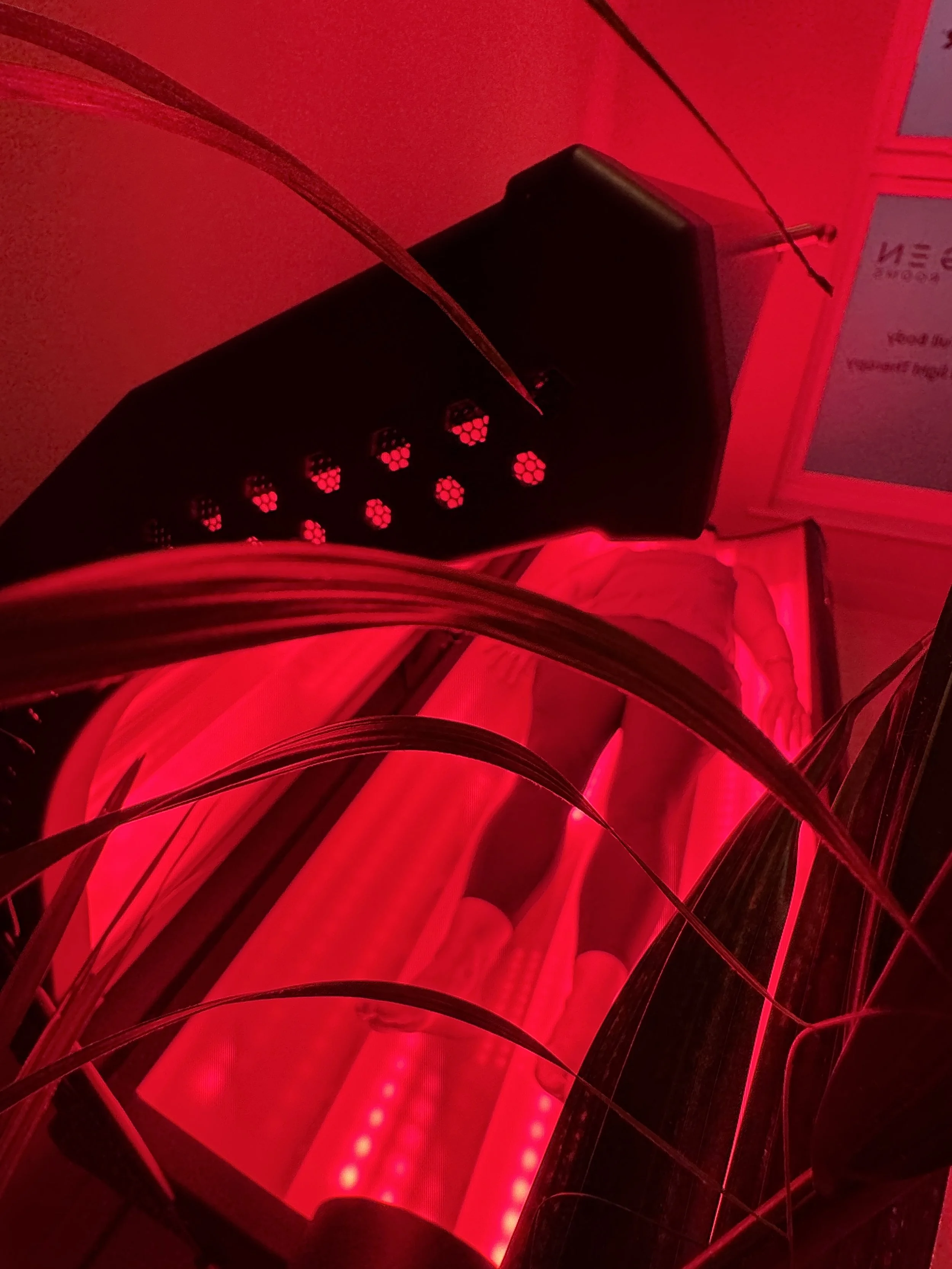
Medical-grade red and near-infrared wavelengths delivered evenly across the body using the NovoTHOR system.
Why the NovoTHOR Red Light Bed Matters for Burnout & Recovery
In earlier articles on this site — including our in-depth guide to red light therapy for acne and skin health - we explore how photobiomodulation works at a cellular level, particularly its effects on inflammation, mitochondrial activity and tissue repair.Not all red light therapy systems are created equal - and when it comes to supporting burnout, nervous system fatigue and whole-body recovery, delivery matters as much as wavelength.
At ReGen Rooms, red light therapy is delivered using the NovoTHOR® Whole-Body Red Light Therapy Bed, a medical-grade system designed for full-body photobiomodulation rather than isolated or cosmetic use.
Unlike smaller panels or targeted devices, the NovoTHOR system allows for uniform, simultaneous exposure across the entire body, which is particularly relevant when symptoms are systemic rather than localised.
Whole-Body Exposure and Systemic Energy Demand
Burnout does not affect a single muscle or joint. It impacts:
The nervous system
Cellular energy production
Hormonal signalling
Sleep and circadian regulation
Whole-body red light exposure supports these systems collectively by delivering consistent wavelengths to large tissue areas at once. This allows mitochondria throughout the body - not just in one region - to respond simultaneously.
For individuals experiencing global fatigue, poor recovery or stress-related depletion, this systemic approach is often more appropriate than localised treatment alone.
Clinically Researched Wavelengths and Controlled Delivery
The NovoTHOR system delivers red and near-infrared wavelengths that have been widely studied in photobiomodulation research, particularly in relation to:
Mitochondrial function
ATP production
Inflammatory modulation
Cellular stress response
Equally important is dose consistency. Energy delivery is controlled, repeatable and evenly distributed — removing the variability that can occur with smaller or less regulated devices.
This consistency matters when the goal is gradual restoration of baseline function rather than short-term stimulation.
A Calmer Experience for a Dysregulated Nervous System
For individuals in a heightened stress state, the treatment environment itself plays a role in recovery.
The NovoTHOR bed is designed to be used in a rested, supine position, encouraging parasympathetic activation during sessions. Many clients describe sessions as grounding rather than energising — a subtle but important distinction when working with nervous system fatigue.
This aligns with the broader recovery principle explored in our article on how the nervous system controls healing, where safety, consistency and down-regulation are key to restoring balance.
Why Equipment Choice Matters in Long-Term Recovery
When red light therapy is used as part of a longer-term recovery strategy - rather than a one-off experience - the reliability of the system becomes critical.
Medical-grade, whole-body systems like NovoTHOR are designed for repeated use over time, supporting cumulative effects rather than chasing immediate results. This makes them particularly suitable for individuals navigating burnout, chronic stress or prolonged fatigue patterns.
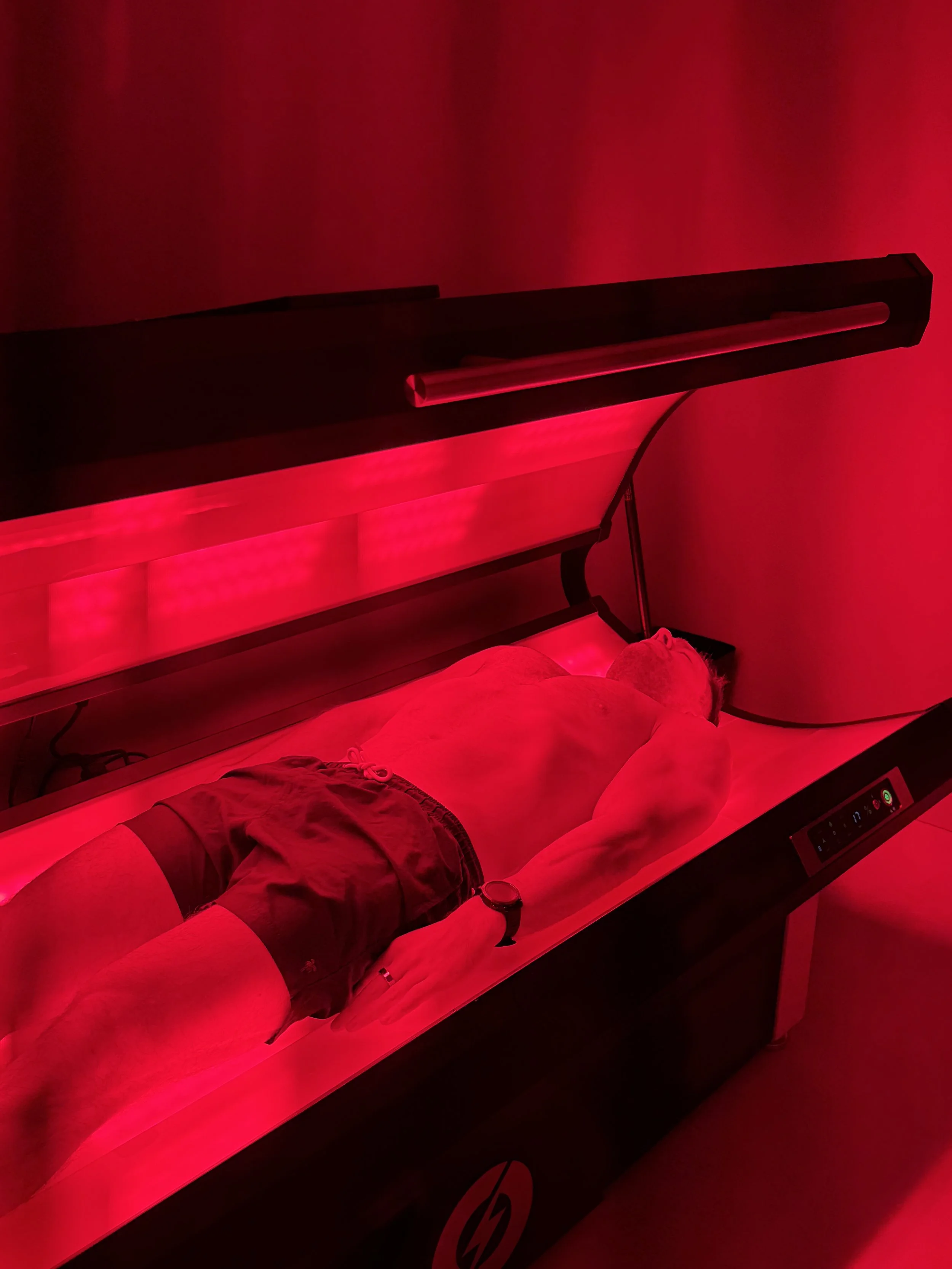
Whole-body red light therapy sessions at ReGen Rooms are designed to support energy, recovery and nervous system balance.
Is Red Light Therapy Safe for Ongoing Use?
When delivered at appropriate wavelengths and dosages, red light therapy is considered non-invasive and well tolerated. Unlike stimulants, it does not override the body’s natural signalling systems.
This is one reason it is increasingly explored as part of long-term recovery strategies, rather than short-term symptom suppression.
-
Some people notice subtle improvements in sleep or energy within the first few sessions. For others, changes are gradual and become more noticeable over several weeks.
-
No. Red light therapy supports cellular efficiency rather than stimulating the nervous system directly. Most people describe sessions as calming rather than energising in a jittery way.
-
No. It supports recovery processes but does not replace foundational factors such as sleep, nutrition and stress management.
-
They work very differently. Caffeine stimulates the nervous system temporarily, while red light therapy supports underlying energy production mechanisms.
Red Light Therapy as Part of a Bigger Recovery Picture
Burnout is rarely caused by one factor - and it’s rarely solved by one intervention.
Red light therapy fits into a modern understanding of recovery that focuses on cellular health, nervous system regulation and long-term resilience, rather than pushing the body harder when it’s already depleted.
If you’re exploring recovery options, this article sits alongside our deeper guides on fatigue, inflammation and nervous system health to help you make informed, evidence-led decisions.
Considering Red Light Therapy as Part of Your Recovery?
If ongoing fatigue or burnout has left you feeling flat, wired or slow to recover, red light therapy may be worth exploring as part of a wider recovery approach.
At ReGen Rooms, sessions are delivered using the medical-grade NovoTHOR® whole-body red light system, designed to support cellular energy production and nervous system regulation in a calm, clinical setting.
You can learn more about red light therapy sessions at ReGen Rooms, or book an appointment when it feels right for you.
